
Pterodactyls & Pterosaurs
Here is something that surprises almost everyone: there was no such thing as a dinosaur that could fly.
Pterodactyls and pterosaurs were not dinosaurs. They were a completely separate group of flying reptiles called pterosaurs say it TAIR-oh-sors that ruled the skies for over 160 million years alongside the dinosaurs. They were more closely related to modern crocodiles and birds than to T. rex.
The name pterodactyl is what most people say when they mean any prehistoric flying reptile. But Pterodactyl is actually a nickname for one specific genus, Pterodactylus. All the flying reptiles on this page including Pteranodon, Quetzalcoatlus, and Hatzegopteryx are officially pterosaurs. Click any name to hear how to say it and see pictures.
Pterodactyl & Pterosaur Pictures
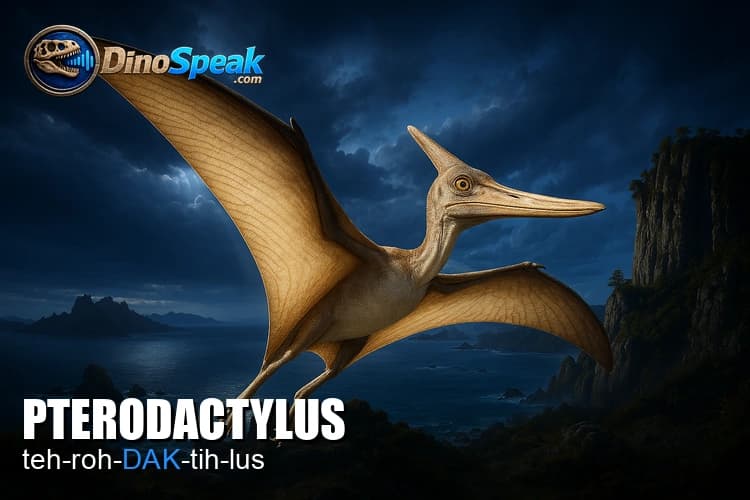
Pterodactyl
teh-ROH-dak-til
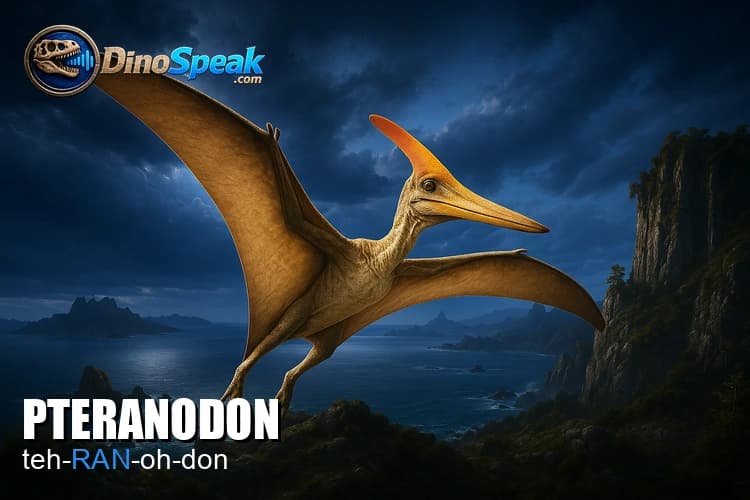
Pteranodon
teh-RAN-oh-don
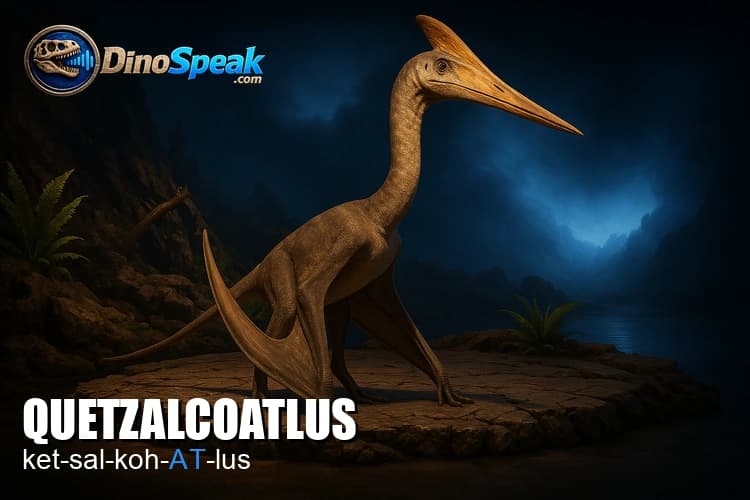
Quetzalcoatlus
ket-sal-koh-AT-lus
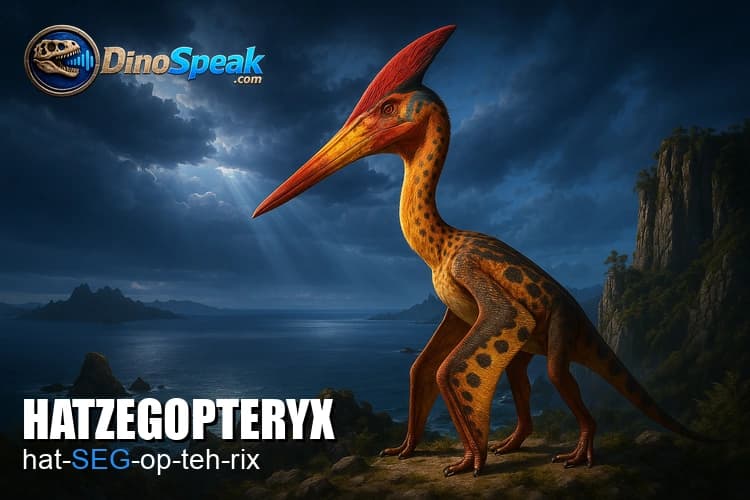
Hatzegopteryx
hat-SEG-op-teh-rix
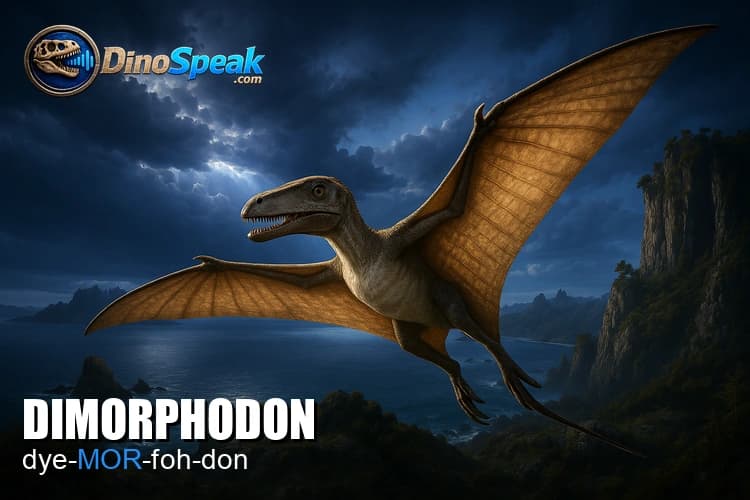
Dimorphodon
dye-MOR-foh-don
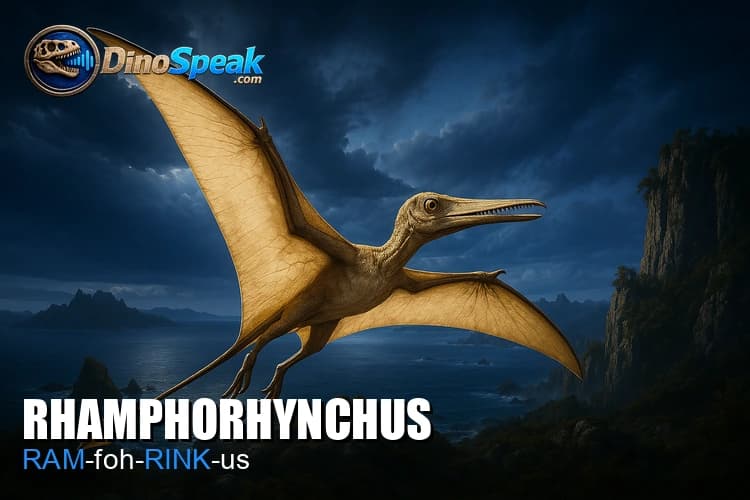
Rhamphorhynchus
RAM-foh-RINK-us
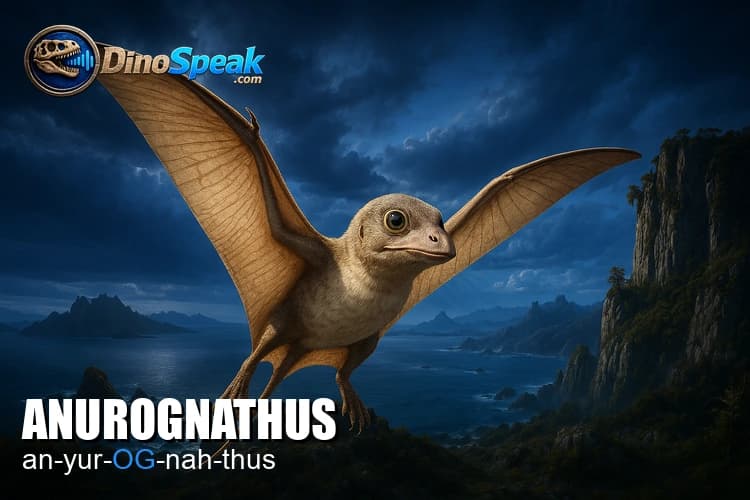
Anurognathus
an-yur-OG-nah-thus
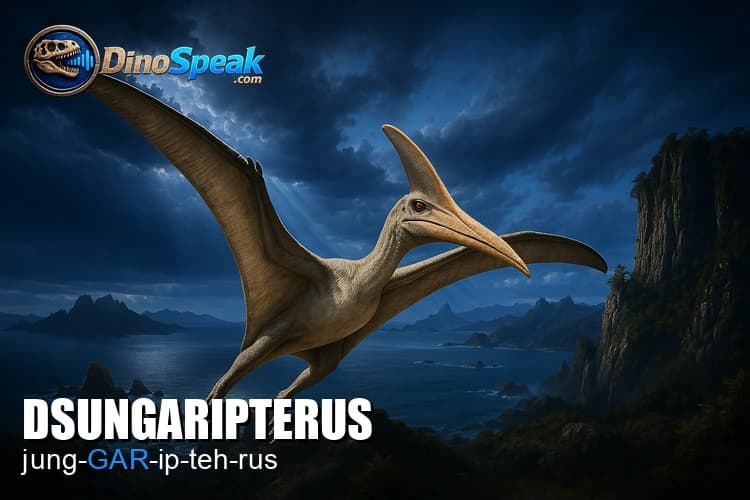
Dsungaripterus
jung-GAR-ip-teh-rus
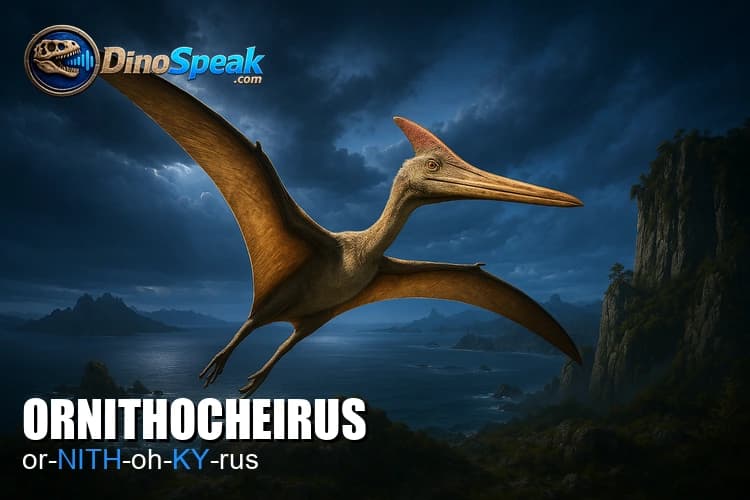
Ornithocheirus
or-NITH-oh-KY-rus
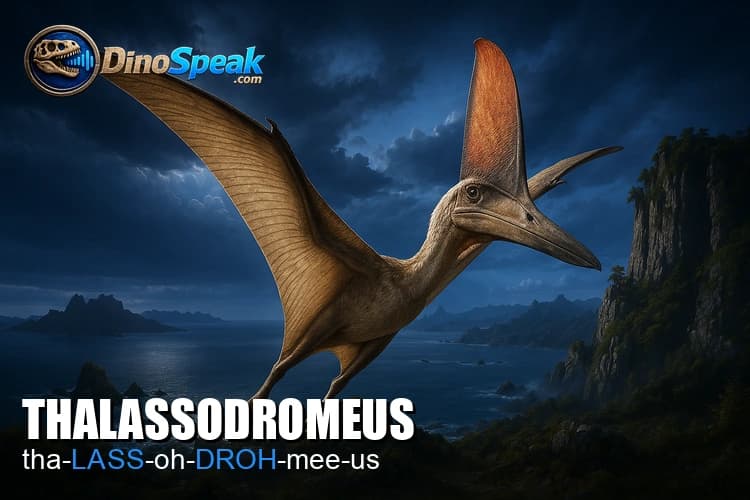
Thalassodromeus
tha-LASS-oh-DROH-mee-us
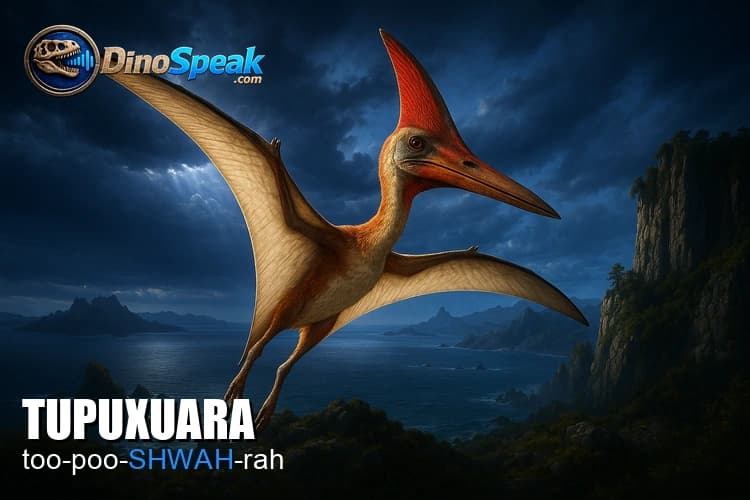
Tupuxuara
too-poo-SHWAH-rah
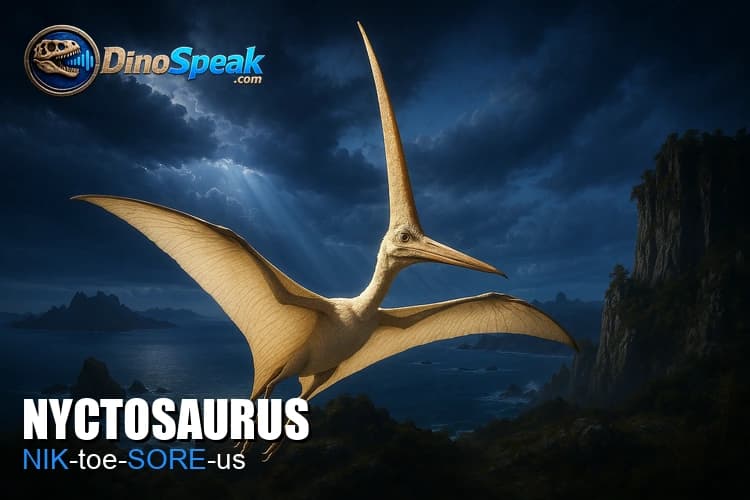
Nyctosaurus
NIK-toe-SORE-us
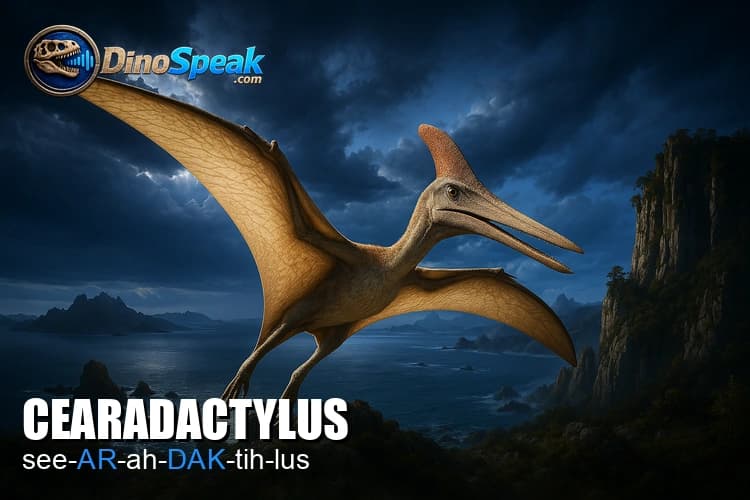
Cearadactylus
see-AR-ah-DAK-tih-lus
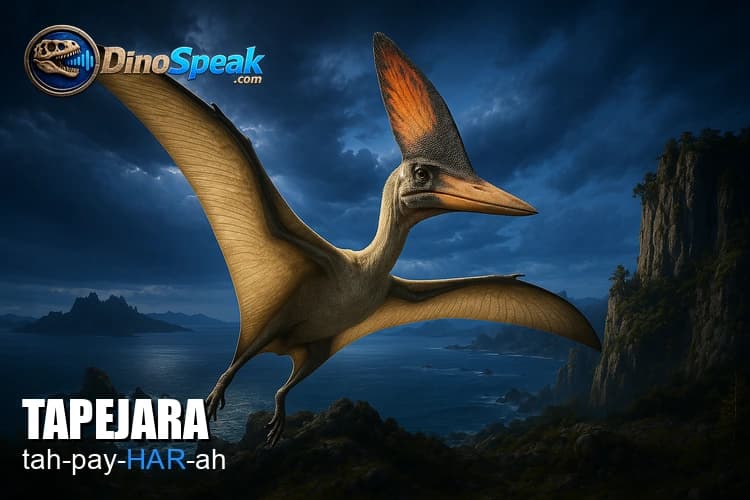
Tapejara
tah-pay-HAR-ah
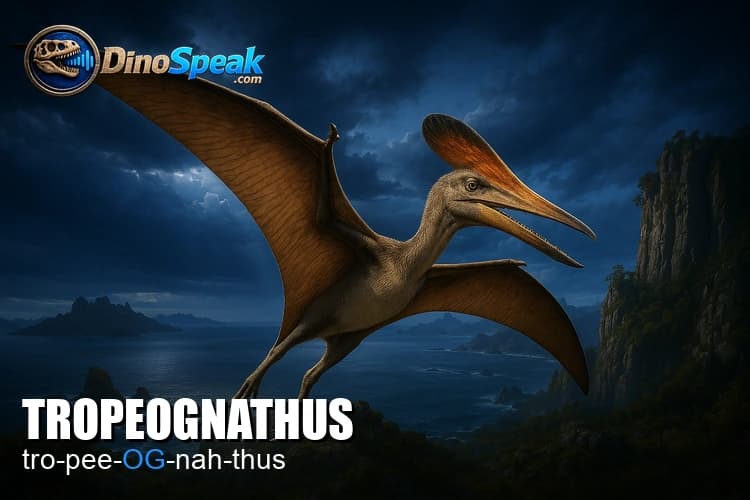
Tropeognathus
tro-pee-OG-nah-thus
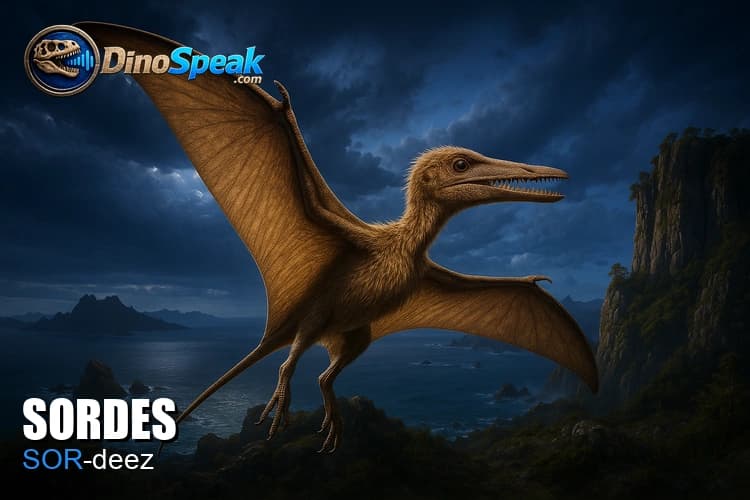
Sordes
SOR-deez
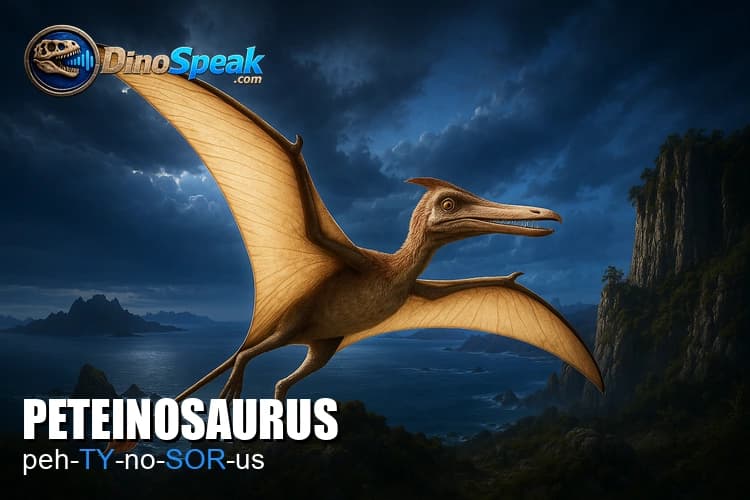
Peteinosaurus
peh-TY-no-SOR-us
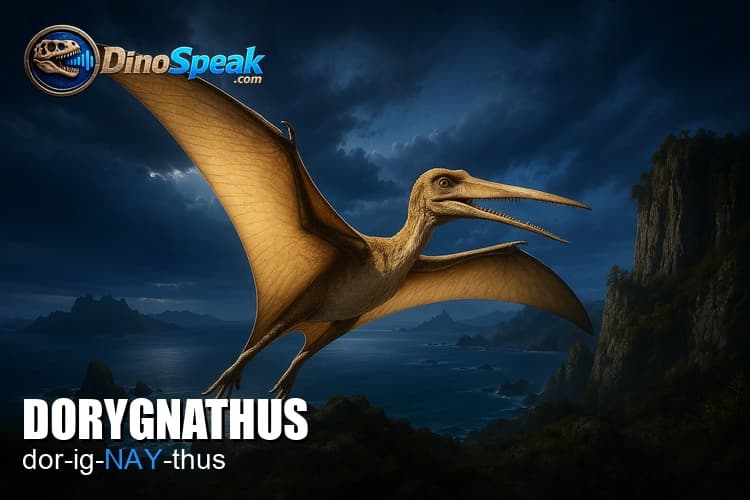
Dorygnathus
dor-ig-NAY-thus
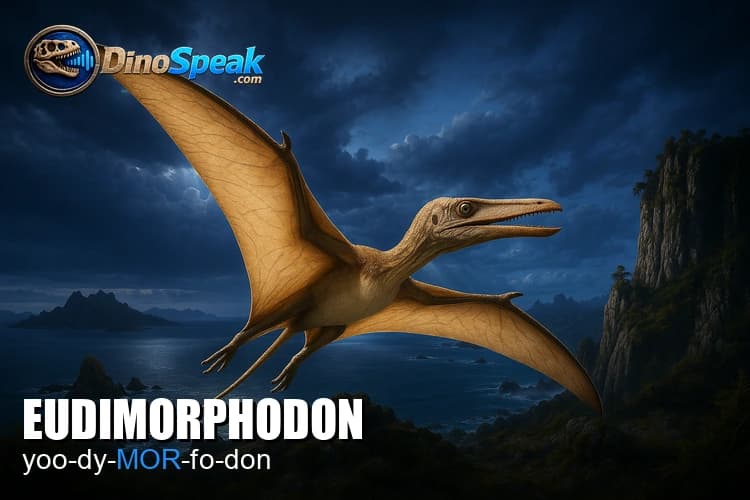
Eudimorphodon
yoo-dy-MOR-fo-don
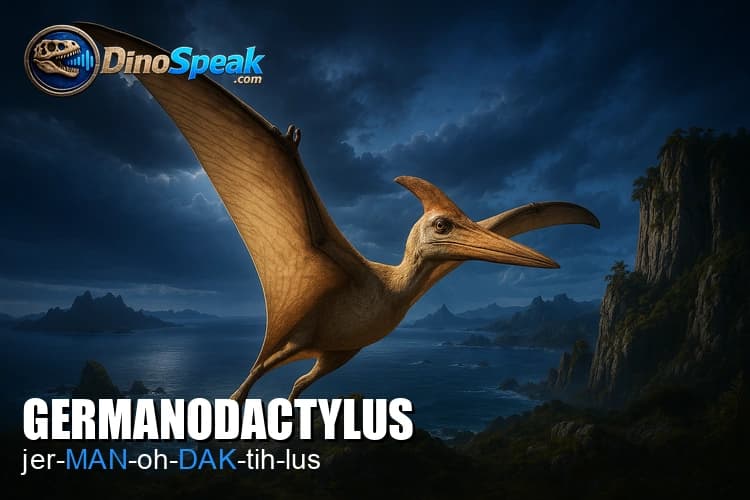
Germanodactylus
jer-MAN-oh-DAK-tih-lus
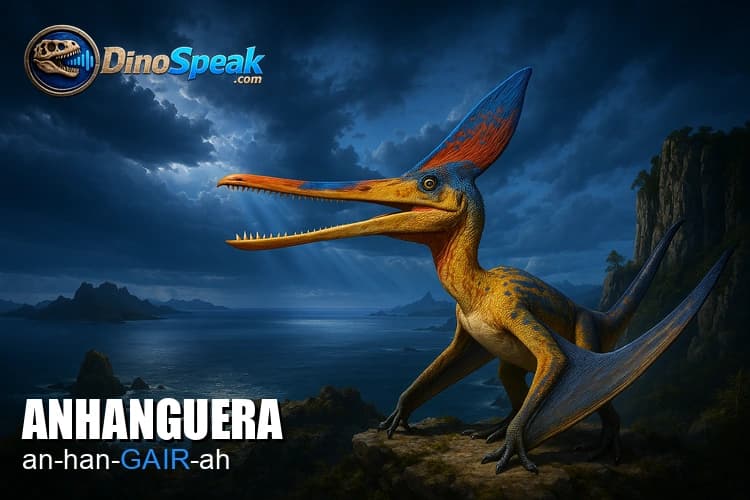
Anhanguera
an-han-GAIR-ah
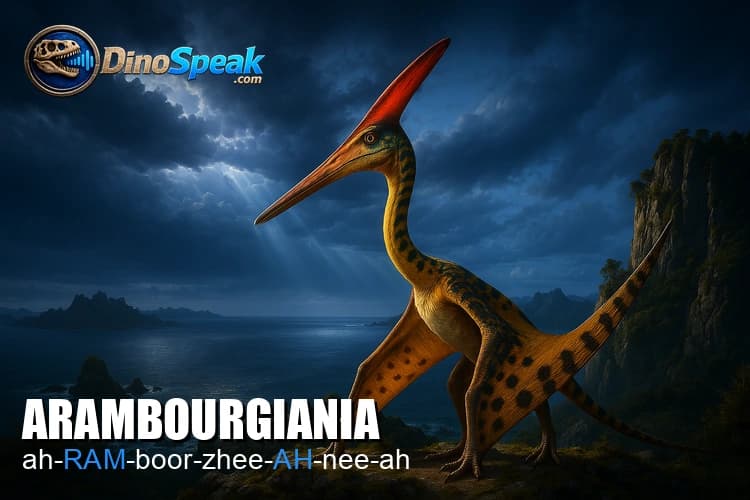
Arambourgiania
ah-RAM-boor-zhee-AH-nee-ah
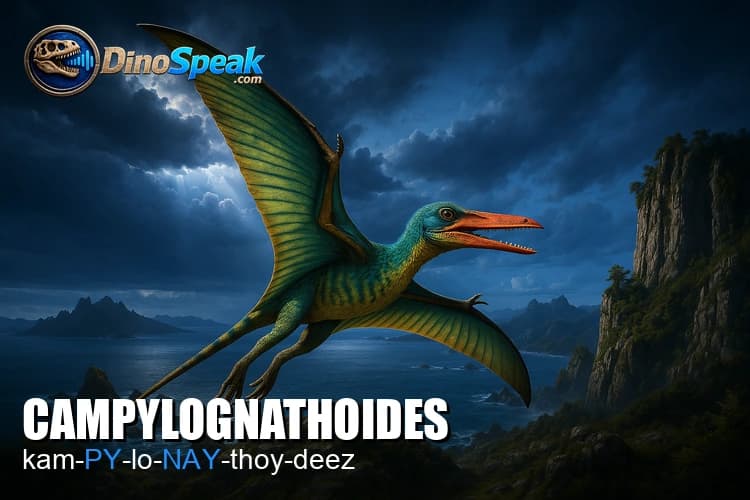
Campylognathoides
kam-PY-lo-NAY-thoy-deez
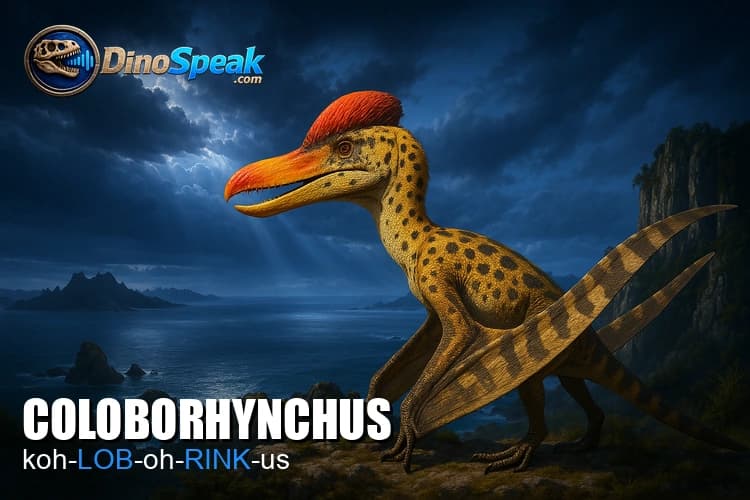
Coloborhynchus
koh-LOB-oh-RINK-us
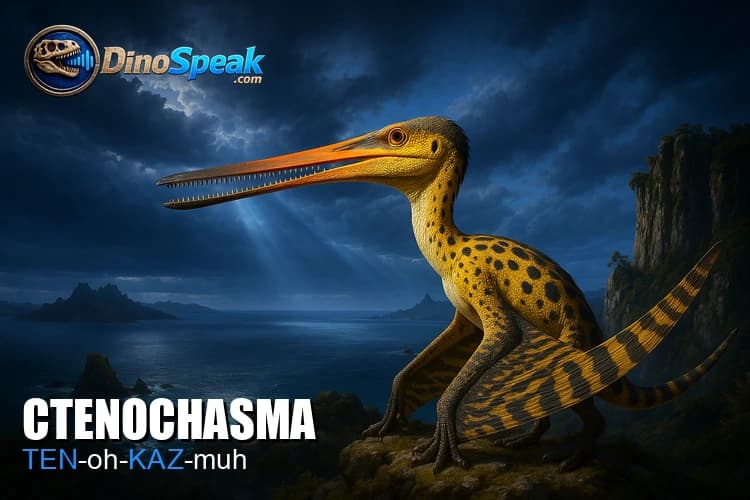
Ctenochasma
TEN-oh-KAZ-muh
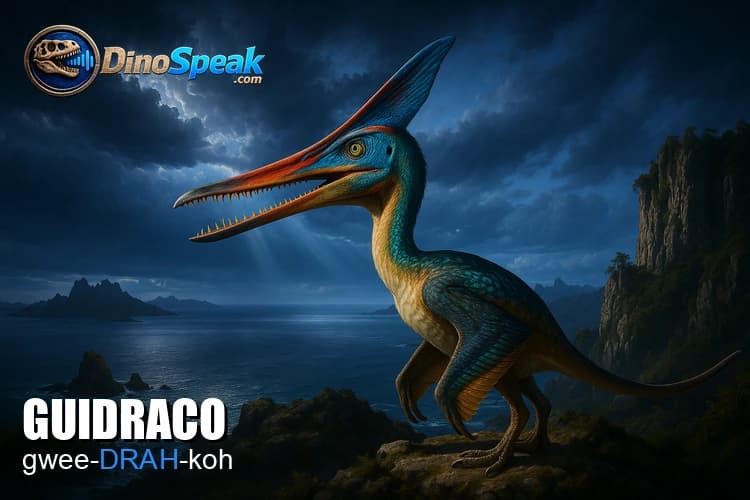
Guidraco
gwee-DRAH-koh
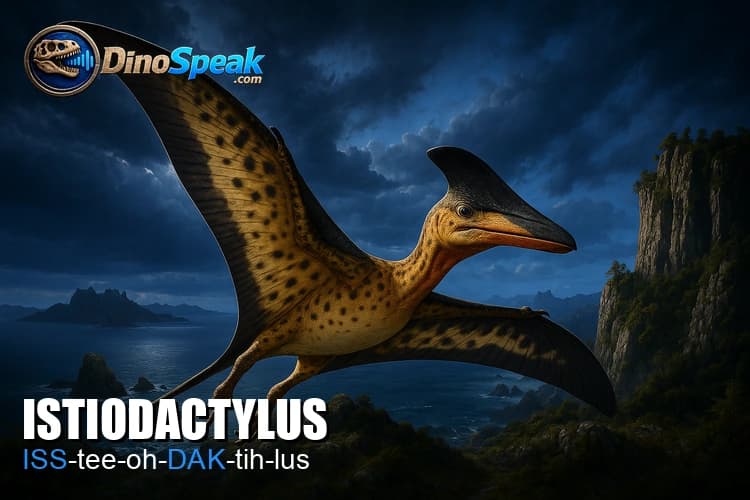
Istiodactylus
ISS-tee-oh-DAK-tih-lus
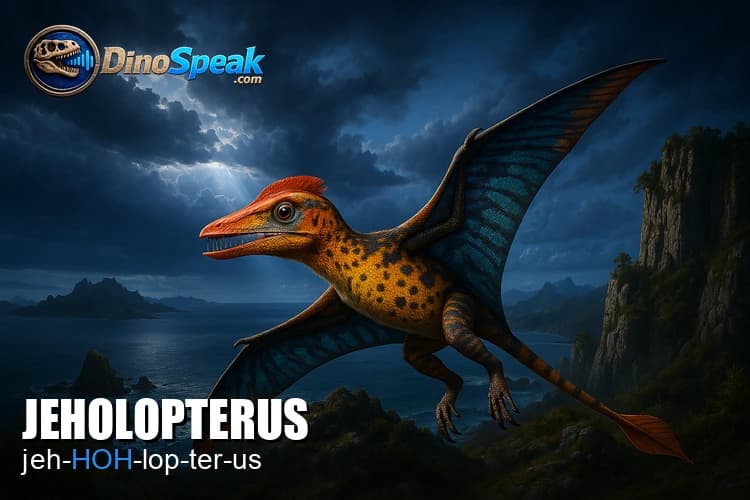
Jeholopterus
jeh-HOH-lop-ter-us
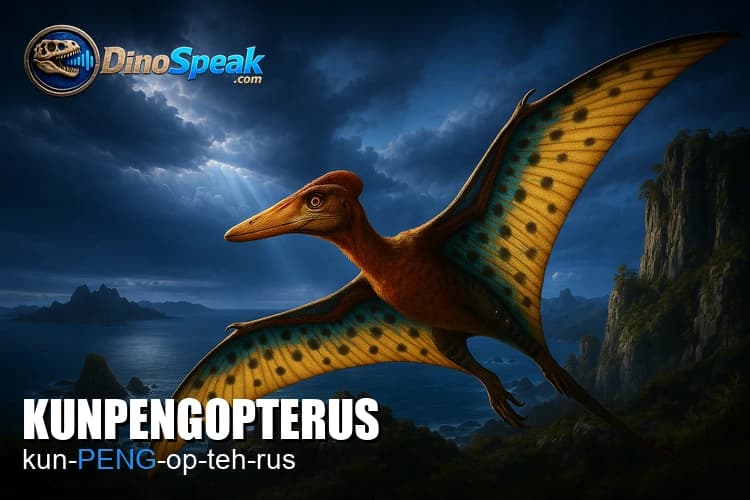
Kunpengopterus
kun-PENG-op-teh-rus
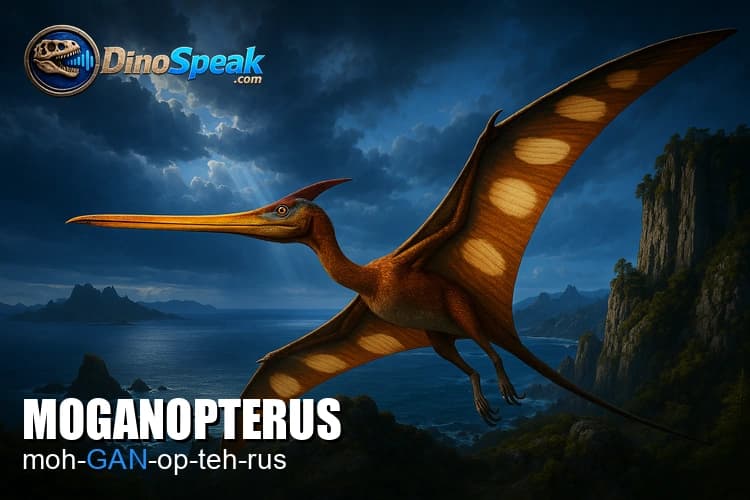
Moganopterus
moh-GAN-op-teh-rus
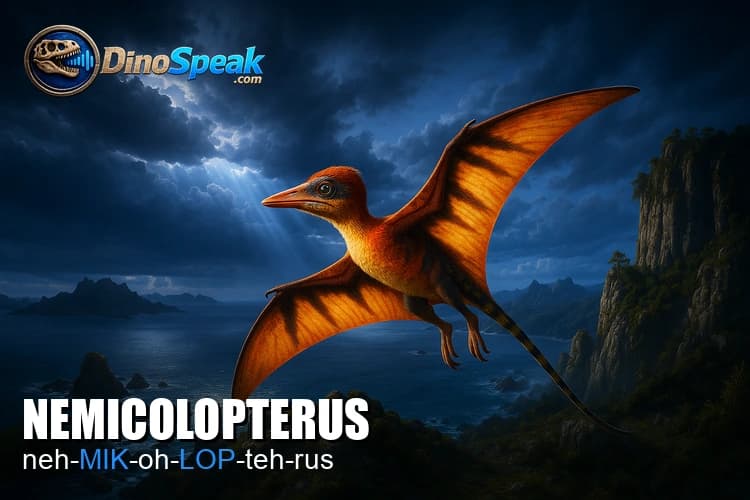
Nemicolopterus
neh-MIK-oh-LOP-teh-rus
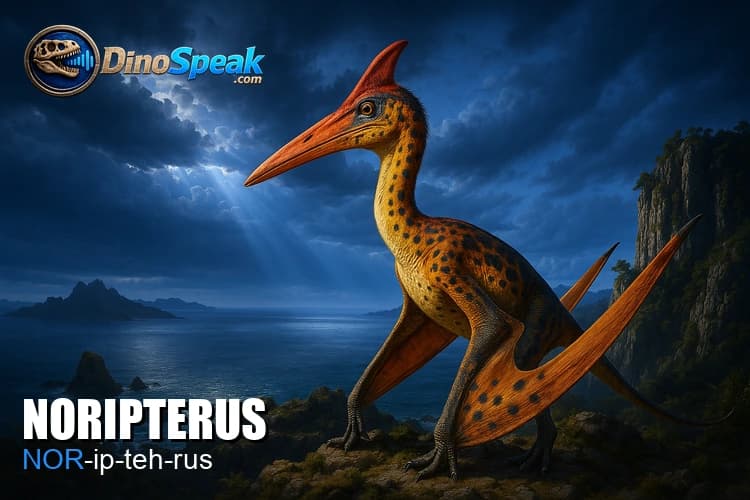
Noripterus
NOR-ip-teh-rus
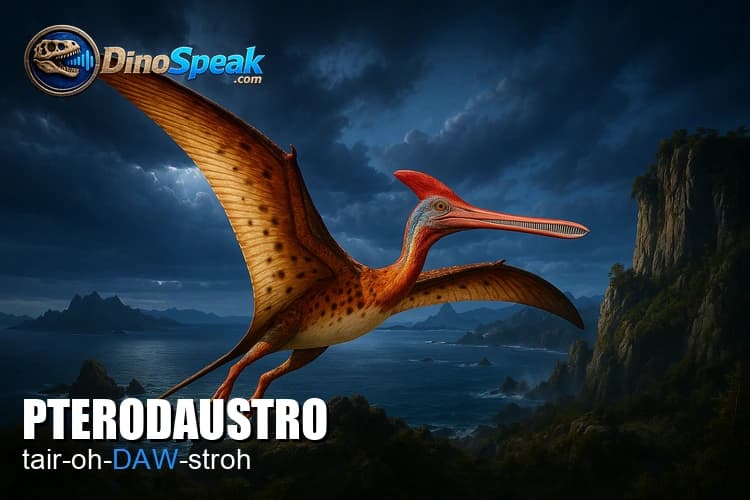
Pterodaustro
tair-oh-DAW-stroh
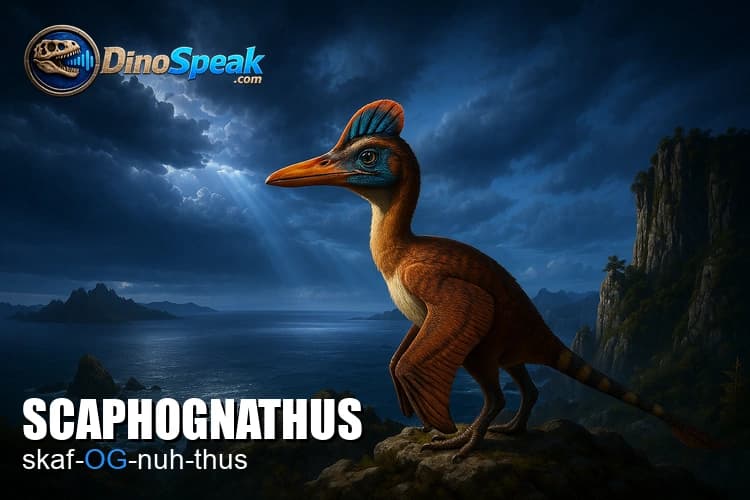
Scaphognathus
skaf-OG-nuh-thus
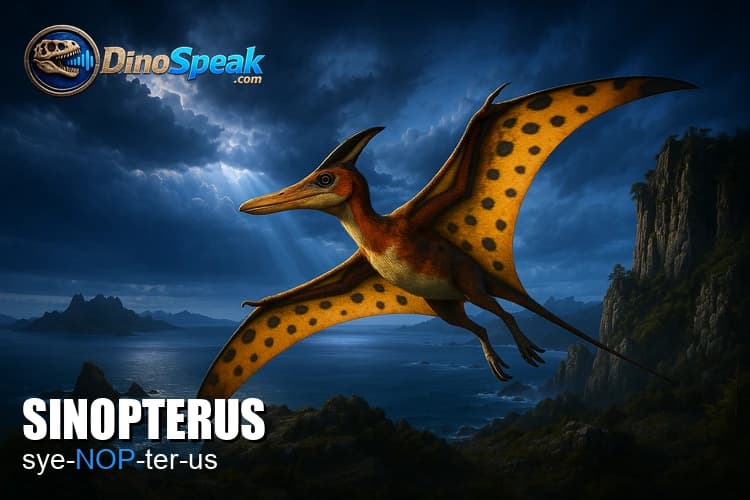
Sinopterus
sye-NOP-ter-us
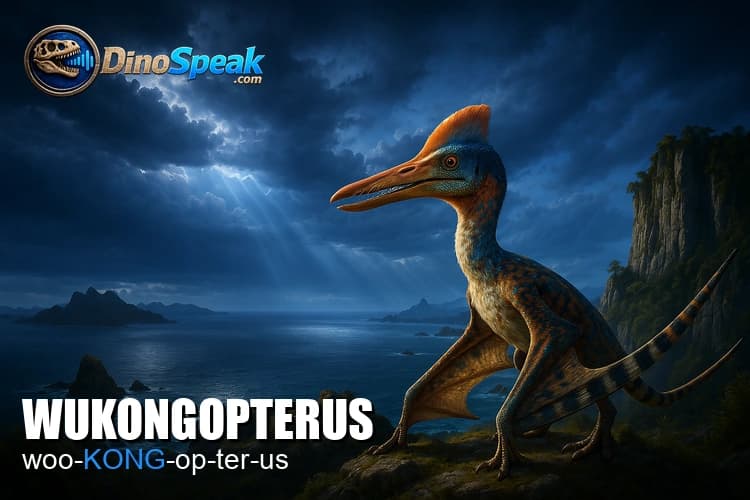
Wukongopterus
woo-KONG-op-ter-us
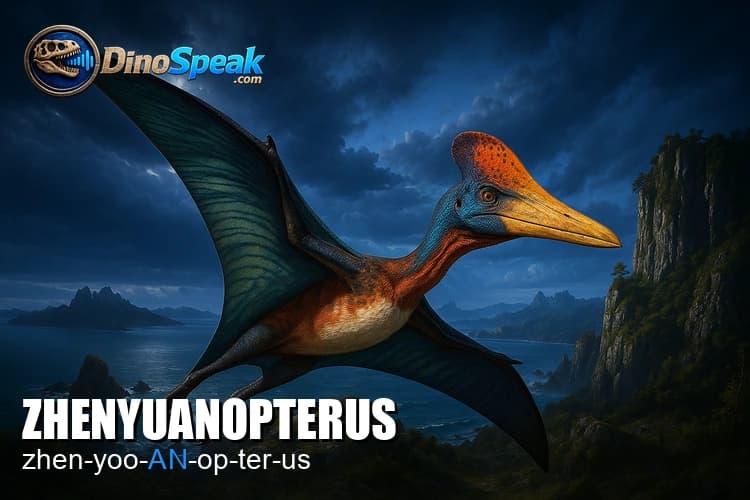
Zhenyuanopterus
zhen-yoo-AN-op-ter-us
What Is a Pterodactyl? The Name Everyone Gets Wrong
Pterodactyl pronounced TAIR-oh-DAK-til is one of the most famous prehistoric names in the world, and also one of the most misunderstood. The P at the start is completely silent. The name comes from Greek and means winged finger because pterosaur wings were stretched across an enormously elongated fourth finger.
When most people say pterodactyl they mean any prehistoric flying reptile from the Mesozoic Era. But paleontologists use the word pterosaur for the whole group and reserve pterodactyl as a shorthand for Pterodactylus, one specific genus with dozens of species. Every pterodactyl is a pterosaur, but not every pterosaur is a pterodactyl.
All pterosaurs had the same basic wing structure: a flight membrane of skin and muscle stretched from the body to a single super-long finger. They also had hollow bones to save weight, and the larger species had a head crest that may have been brightly colored for display or temperature regulation.
The Most Famous Pterodactyls and Flying Reptiles
Quetzalcoatlus pronounced KWET-zal-KOH-at-lus is the largest flying animal that ever lived. Its wingspan stretched up to 11 meters wider than a small plane and it stood as tall as a giraffe when walking on the ground. It lived in Late Cretaceous North America and was likely a predator that hunted small dinosaurs and other land animals.
Hatzegopteryx pronounced HAT-ze-GOP-ter-ix was equally enormous, estimated to have a wingspan of 10 to 12 meters. It lived on an island in what is now Romania and with no large predators around it likely evolved to fill the top predator role itself.
Pteranodon pronounced teh-RAN-oh-don is the most recognized pterosaur after pterodactyl. The name means toothless wing it had no teeth, unlike many other pterosaurs. Its distinctive backward-pointing head crest is one of the most iconic silhouettes in prehistoric life.
Dimorphodon pronounced dy-MORE-foh-don had a huge head relative to its body, almost like a cartoon. Its name means two forms of teeth because unlike most pterosaurs it had two distinctly different types of teeth in its jaws.