
Terror Bird Names and Pictures
Terror birds were the most successful apex predators South America ever produced. For nearly 60 million years, from shortly after the dinosaurs vanished to the edge of the Ice Age, these enormous flightless carnivores ruled a continent with no lions, no wolves, and no competition worthy of the name.
They were not dinosaurs, but they were just as commanding. Some stood taller than a basketball hoop, with skulls the size of baseball bats and beaks built to deliver axe-like killing blows. Below is every confirmed Phorusrhacidae species with phonetic pronunciation, size, and key facts.
Read the Full Terror Bird Facts GuideAll Terror Bird Species (11 Phorusrhacidae)
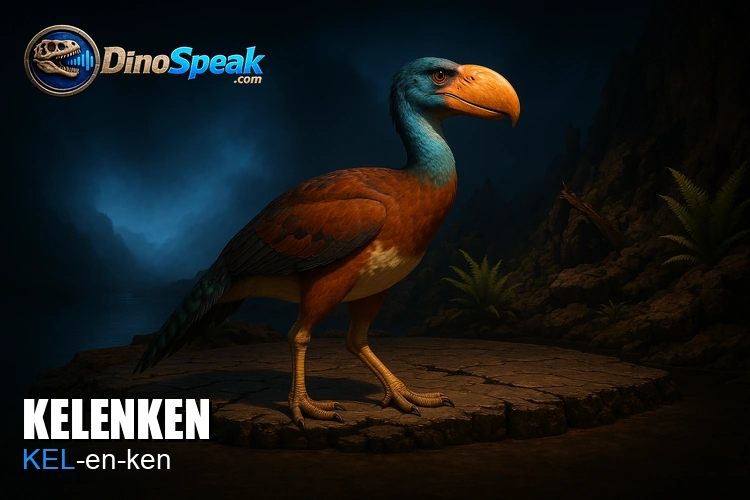
Kelenken
keh-LEN-ken
Held the largest bird skull ever found, a 28-inch skull with an 18-inch beak
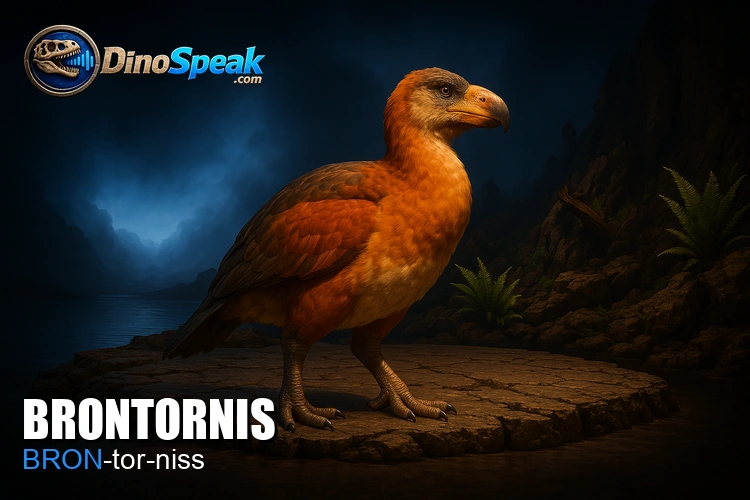
Brontornis
bron-TOR-nis
The heaviest terror bird at up to 880 lbs, close to a male polar bear
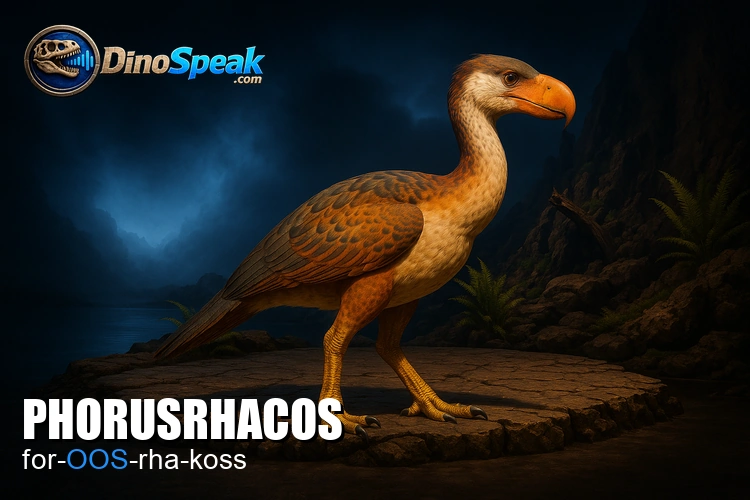
Phorusrhacos
for-us-RAY-kos
The species that gave the entire Phorusrhacidae family its scientific name
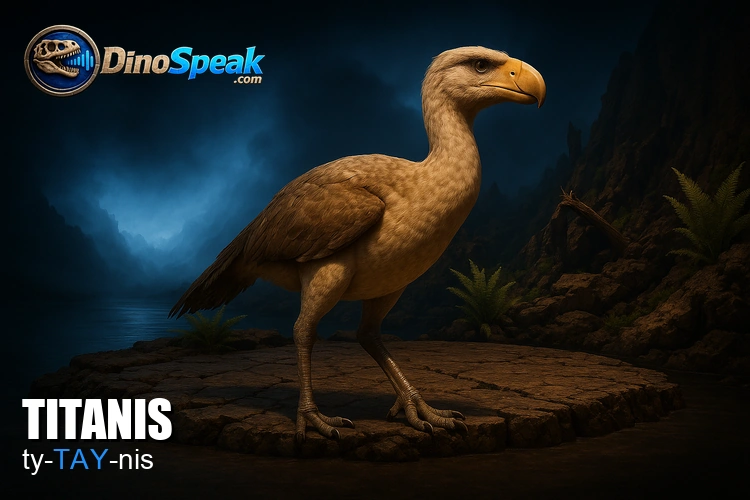
Titanis
ty-TAY-nis
The only terror bird ever found in North America, with fossils in Florida and Texas
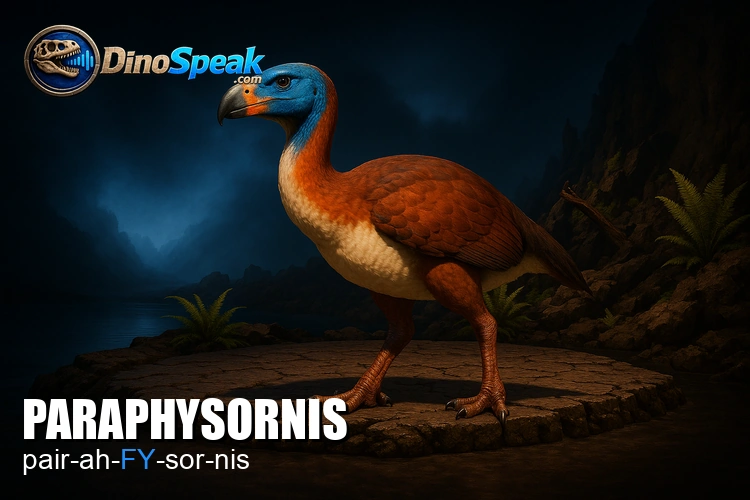
Paraphysornis
pair-ah-FY-sor-nis
Known from a single fossil found in Brazilian bentonite clay, one of the rarest terror bird finds
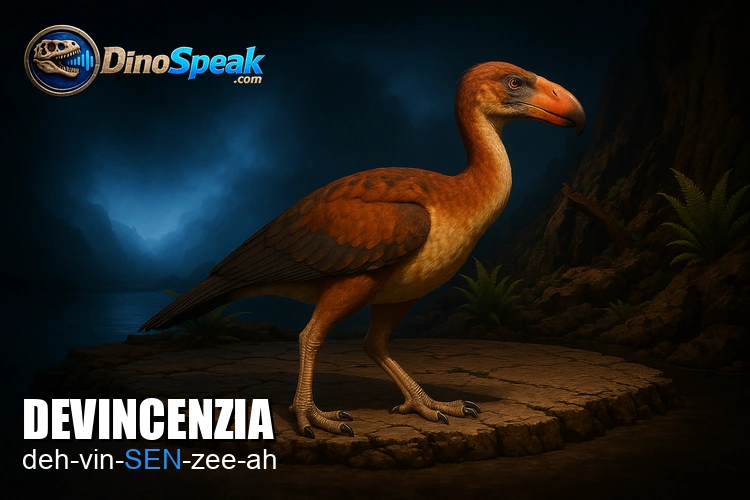
Devincenzia
dev-in-CHEN-zee-ah
Some specimens may have reached 770 lbs, rivaling even Kelenken in sheer mass
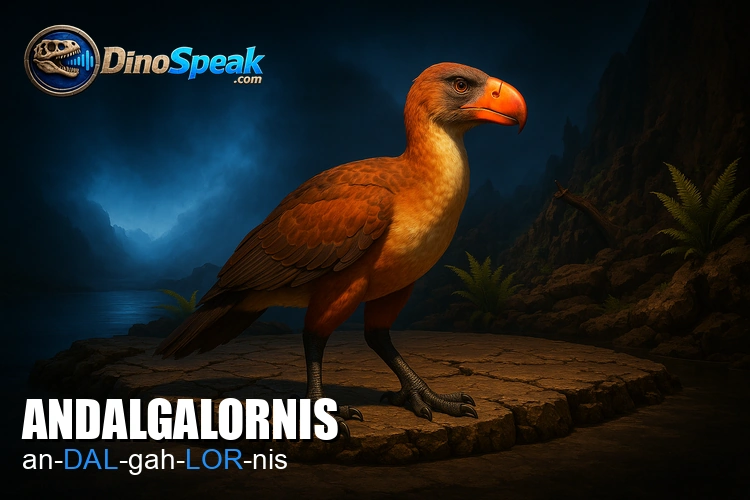
Andalgalornis
an-DAL-gah-LOR-nis
Its beak struck like an axe. Scientists proved it could not bite sideways without risking skull fracture
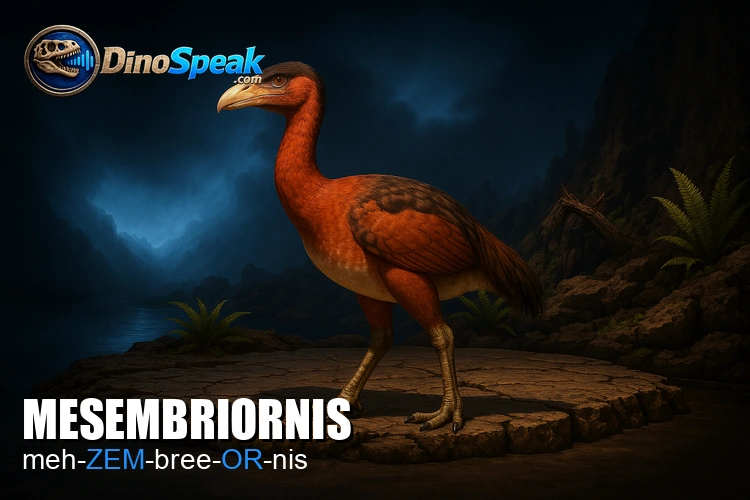
Mesembriornis
meh-ZEM-bree-or-nis
Leg bone analysis suggests it may have run at 60 mph, as fast as a cheetah
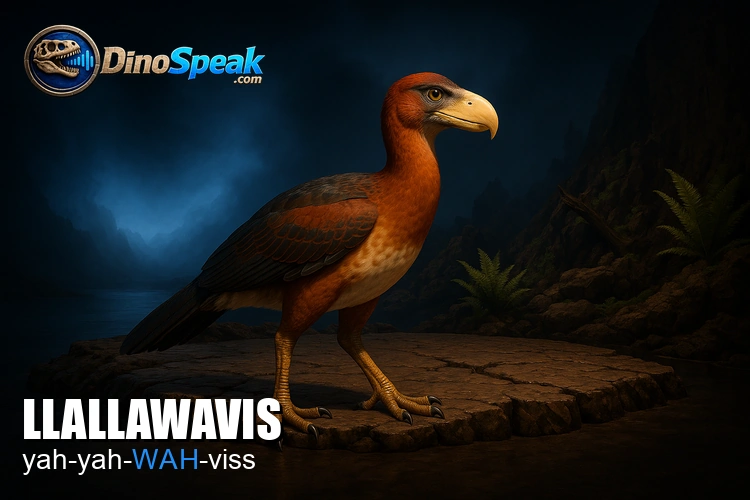
Llallawavis
yah-yah-WAH-vis
The most complete terror bird fossil ever found, over 90% preserved, including the voice box
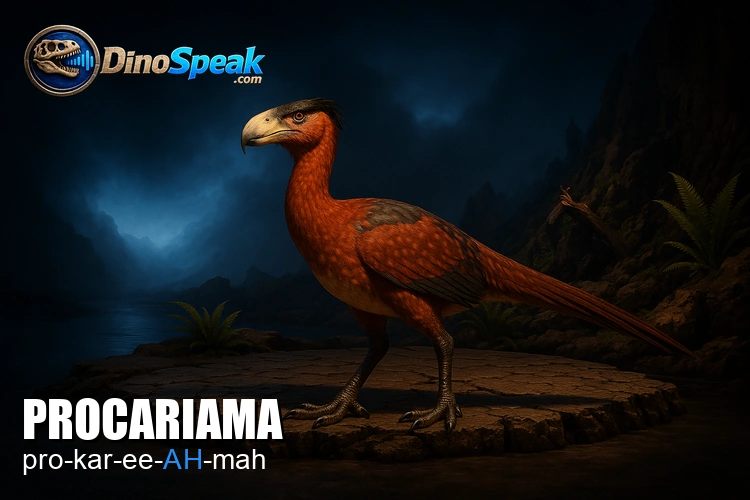
Procariama
pro-kar-ee-AH-mah
A lightly built small terror bird built for speed, one of the fast-running Psilopterinae
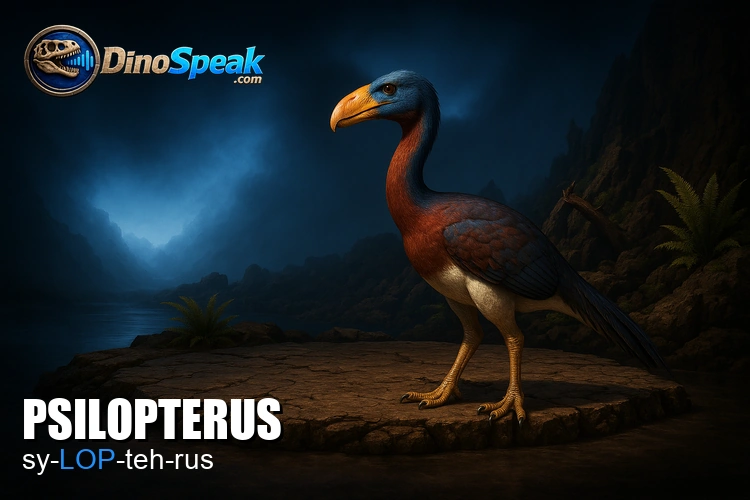
Psilopterus
sy-LOP-ter-us
The smallest terror bird, turkey-sized, but survived until about 96,000 years ago
What Is a Terror Bird?
A terror bird is a member of the extinct bird family Phorusrhacidae, a group of large, flightless, carnivorous birds that evolved in South America after the extinction of the non-avian dinosaurs. Despite the dramatic name, terror birds were true birds: they had feathers, were warm-blooded, laid eggs, and shared a common ancestor with every bird alive today.
They are called terror birds because of their size, their killing beaks, and their role as apex predators, the top of the food chain, across an entire continent for tens of millions of years. Their closest living relatives today are seriemas, a pair of medium-sized ground-hunting birds still found in South America, which use a similar attack technique: grabbing prey and slamming it against the ground repeatedly.
A terror bird's most distinctive feature was its skull. It was deep, narrow, powerfully built, ending in a downward-curving hook, and engineered not for biting and holding but for delivering rapid axe-like downward strikes with the force of powerful neck muscles driving the rigid skull into prey.
How Many Terror Bird Species Were There?
Scientists currently recognize approximately 18 to 20 confirmed species of terror birds, organized across 14 genera and 5 subfamilies. The five subfamilies reflect very different ecological strategies.
Brontornithinae contained the largest and heaviest species, including Brontornis and Paraphysornis, likely ambush predators given their heavy build. Phorusrhacinae included the giant cursorial predators like Kelenken and Phorusrhacos, built for pursuit of large prey in open grasslands. Patagornithinae included mid-sized precision hunters like Andalgalornis and Devincenzia. Mesembriornithinae contained species like Mesembriornis and the extraordinarily complete Llallawavis. Psilopterinae, the smallest subfamily, contained turkey-sized species like Psilopterus.
Notably, no two same-sized species appear to have lived in the same place at the same time, a pattern of niche partitioning that scientists have traced back to the very early history of the family.
Where Did Terror Birds Live?
Terror birds were overwhelmingly a South American family. The vast majority of known fossils come from Argentina, which has produced the most abundant and best-preserved specimens across all five subfamilies. Brazil and Uruguay have also contributed significant finds.
Terror birds thrived in South America because the continent was geographically isolated, cut off from the rest of the world, with no large carnivorous placental mammals to compete with. This isolation persisted for tens of millions of years and allowed the phorusrhacids to evolve into the continent's sole apex predators.
The picture changed approximately 3 million years ago when the Isthmus of Panama formed, connecting North and South America. One terror bird species, Titanis walleri, crossed north, reaching as far as Texas and Florida. Titanis is the only phorusrhacid confirmed outside South America.
When Did Terror Birds Go Extinct?
Terror birds did not vanish in a single catastrophic event. Their extinction was a gradual process that unfolded over millions of years as conditions in South America changed dramatically.
The largest species disappeared from the fossil record around 1.8 million years ago. The primary driver was the Great American Biotic Interchange, triggered when the Isthmus of Panama formed approximately 3 million years ago. This land bridge allowed a flood of North American carnivores, including saber-toothed cats, wolves, and bears, to enter South America. These newcomers were specialists in grappling and bone-crushing techniques that terror birds, with their laterally weak skulls, could not match.
The small Psilopterus lineage proved far more resilient, surviving as a small cursorial predator of insects and vertebrates. The last confirmed Psilopterus record comes from Uruguay, dated to approximately 96,040 years ago. Terror birds disappeared long before humans arrived in the Americas in significant numbers, meaning humanity played no role in their extinction.