Dsungaripterus Pronunciation
Picture, name meaning, and how to say Dsungaripterus. Free guide for kids and parents.
How to Pronounce Dsungaripterus
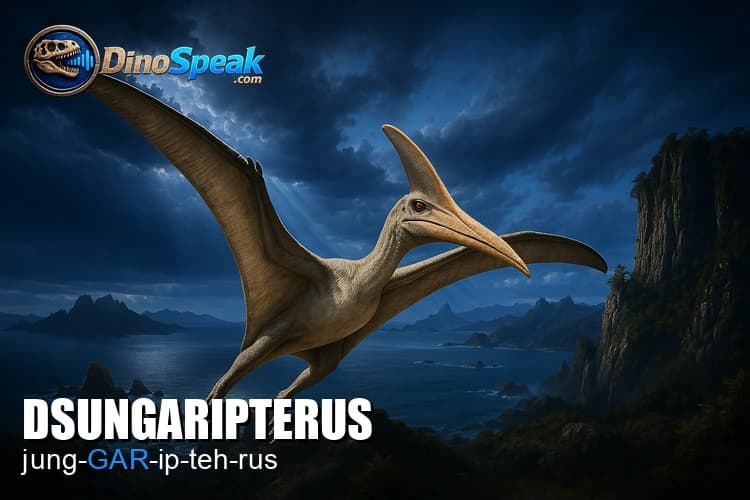
jung-GAR-ip-teh-rus
ALL CAPS = stressed syllable
What does Dsungaripterus mean?
Junggar Basin wing from China
Name Roots
"Dsungar (Junggar)"
referring to the Junggar Basin in northwest China, where fossils were found; from the Mongolian-derived place name
"pteron (Greek)"
wing; from ancient Greek, the standard root used in pterosaur names
"-us (Latin)"
standard Latin masculine noun ending used in scientific names
Fun Facts
- ✓Dsungaripterus had a hard bony crest running along the top of its skull, and scientists think it may have used this crest for species recognition or to attract mates, just like modern toucans use their flashy beaks as visual signals.
- ✓The Junggar Basin where Dsungaripterus lived was a very different place 125 million years ago: instead of the cold Central Asian desert it is today, it was a warm, wet floodplain full of rivers, lakes, and seasonal wetlands teeming with shellfish.
- ✓Dsungaripterus belongs to the family Dsungaripteridae, a group so distinctive that paleontologists named the entire family after this one genus, which means every dsungaripterid discovered anywhere in the world is being compared back to this Chinese original.
- ✓The upward-curving tip of its beak had no teeth at all, which likely worked like a pair of tweezers to pluck shellfish and invertebrates out of crevices in rocks or mud before passing them back to those powerful crushing molars.
- ✓Dsungaripterus lived during the Valanginian Age, roughly 132 to 121 million years ago, making it a contemporary of early flowering plants just beginning to appear on Earth, placing this bizarre flying reptile at one of the most pivotal moments in plant evolution.
Period
Early Cretaceous
132.6–121.4 MYA
Diet
Carnivore
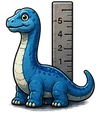
Size
10 ft (3 m) wingspan
22 lbs (10 kg)
Type
Pterodactyloidea