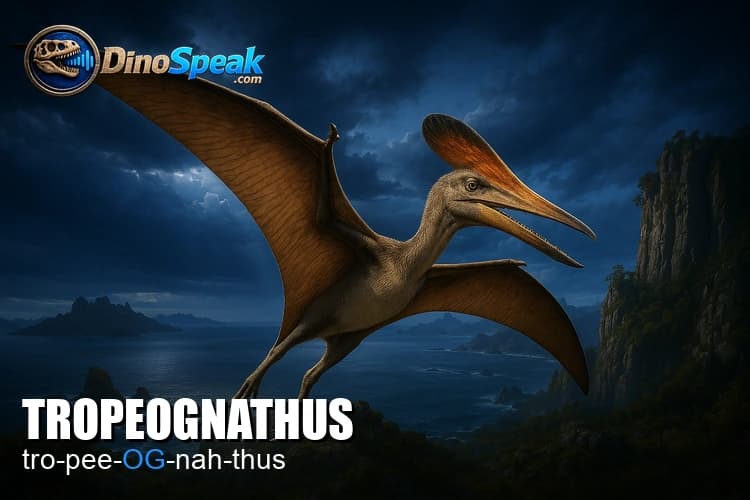
Tropeognathus Pronunciation
Picture, name meaning, and how to say Tropeognathus. Free guide for kids and parents.
How to Pronounce Tropeognathus
tro-pee-OG-nah-thus
ALL CAPS = stressed syllable
What does Tropeognathus mean?
Keel jaw, from Greek roots
Name Roots
"tropaion / tropis"
keel or curved ridge, from Greek 'tropis'
"gnathos"
jaw, from Greek 'gnathos'
Fun Facts
- ✓With a wingspan of up to 8.5 meters (28 feet), Tropeognathus is the largest pterosaur ever discovered in the Southern Hemisphere, beating out every other flying reptile found below the equator.
- ✓The bony keel on the tip of its snout was not just for show: scientists believe it acted like the keel of a boat, slicing through the water surface to snag fish while the animal skimmed low over ancient seas.
- ✓The first Tropeognathus skull was found in the Santana Formation of Brazil in limestone nodules called concretions, and these nodules are so well preserved that soft tissue impressions of crests and skin have been found in related pterosaurs from the same beds.
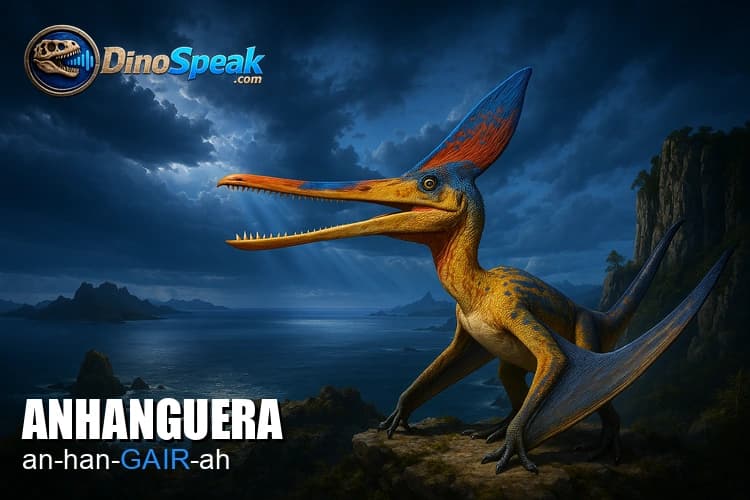
- ✓Tropeognathus belongs to Anhangueridae, a family whose name comes from the Tupi word for 'old devil,' a nickname given by local Brazilian workers who first found these strange toothy skulls jutting out of the rock.
- ✓A close relative called Anhanguera has been found with fish bones still inside its skull, giving direct fossil proof that these pterosaurs were active fish hunters over the ancient shallow sea that once covered what is now the arid Araripe Basin of Brazil.