Diprotodon Pronunciation
Picture, name meaning, and how to say Diprotodon. Free guide for kids and parents.
How to Pronounce Diprotodon
die-PROH-toh-don
ALL CAPS = stressed syllable
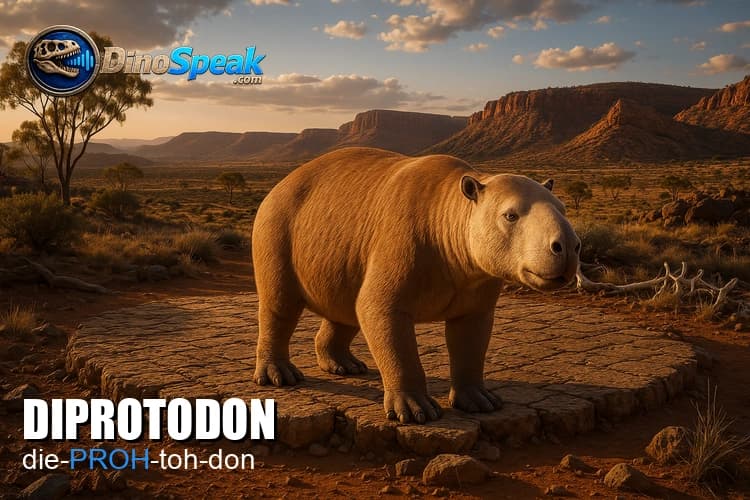
What does Diprotodon mean?
Two front teeth (Ancient Greek)
Name Roots
"di-"
two, from Ancient Greek 'di'
"protos"
first, from Ancient Greek 'protos'
"odous"
tooth, from Ancient Greek 'odous'
Fun Facts
- ✓Diprotodon weighed up to 2,800 kilograms, making it the largest marsupial ever to walk the Earth, heavier than a white rhinoceros.
- ✓When its bones were first discovered in Wellington Caves in 1830, scientists were so baffled they guessed the remains belonged to rhinos, elephants, hippos, or even dugongs.
- ✓Diprotodon is classified in the same superfamily as wombats, meaning this car-sized beast is essentially a giant ancient cousin of the chubby, burrowing wombat you might see in an Australian zoo today.
- ✓Fossil trackways discovered at Lake Callabonna in South Australia show that herds of Diprotodon became trapped and died in drying mud around 25,000 years ago, preserving footprints that let scientists calculate their walking speed and gait.
- ✓Indigenous Australian peoples almost certainly encountered living Diprotodon, and some researchers believe stories of a giant creature called the 'bunyip' in Aboriginal oral traditions may partly reflect cultural memories of this enormous marsupial.
Period
Pleistocene
1.77 MYA to ~0.046 MYA
Diet
Herbivore
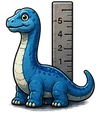
Size
10 ft (3 m)
6,200 lbs (2,800 kg)
Type
Marsupalia