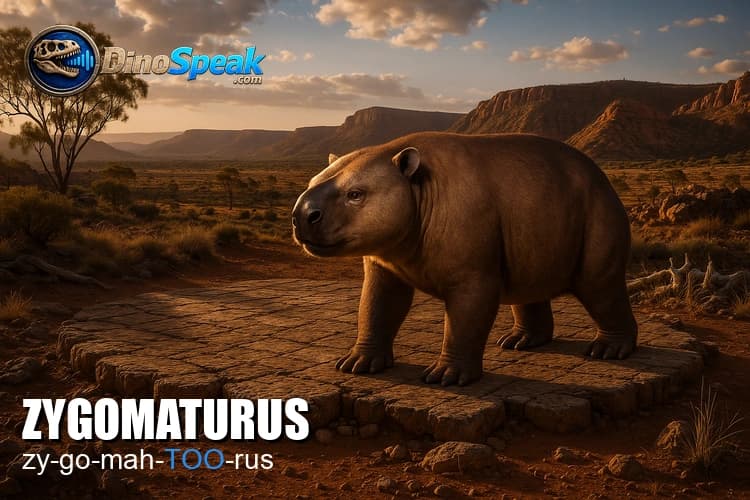
Zygomaturus Pronunciation
Picture, name meaning, and how to say Zygomaturus. Free guide for kids and parents.
How to Pronounce Zygomaturus
zy-go-mah-TOO-rus
ALL CAPS = stressed syllable
What does Zygomaturus mean?
Cheekbone beast of ancient Australia
Name Roots
"zygoma"
cheekbone or yoke-shaped bone, from Greek 'zygon' meaning yoke
"maturos / -urus"
ripe or mature, from Greek, here used as a suffix suggesting a large or fully developed form
Fun Facts
- ✓Zygomaturus is estimated to have weighed around 1,000 kg, making it one of the largest marsupials ever to walk the Earth, comparable in bulk to a modern hippopotamus.
- ✓Its massively flared cheekbones are so distinctive that paleontologists can identify it instantly from skull fragments alone, and those bony arches gave the animal a uniquely wide, bulldozer-like face.
- ✓Zygomaturus survived in Australia from roughly 5.3 million years ago right up until approximately 46,000 years ago, meaning it lived alongside the first Aboriginal Australians for potentially thousands of years.
- ✓Fossil evidence suggests Zygomaturus preferred wet, swampy coastal environments and river margins rather than dry inland plains, making it the marsupial equivalent of a hippo in ecological role.
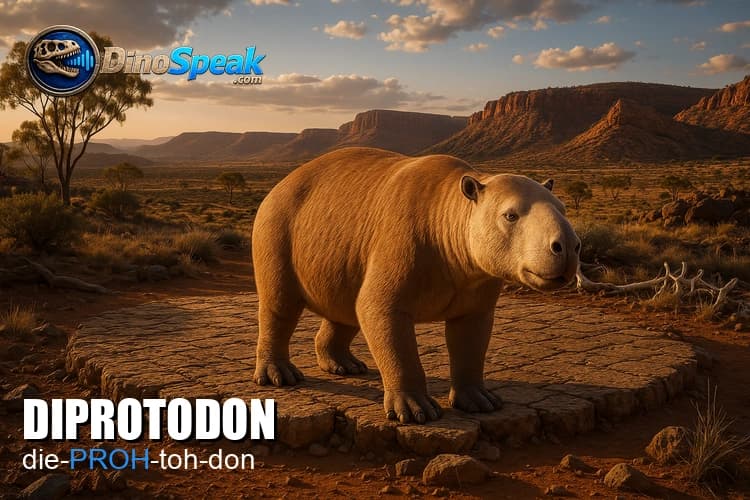
- ✓Despite its enormous size, Zygomaturus belonged to the same family as the diprotodon, the absolute largest marsupial ever known, and both animals vanished from Australia around the same time in the Late Pleistocene megafauna extinction event.
Period
Late Miocene to Late Pleistocene
5.3 to 0.01 MYA
Diet
Herbivore
Size
8 ft (2.4 m)
2,200 lbs (1,000 kg)
Type
Diprotodontoidea