Patagotitan Pronunciation
Picture, name meaning, and how to say Patagotitan. Free guide for kids and parents.
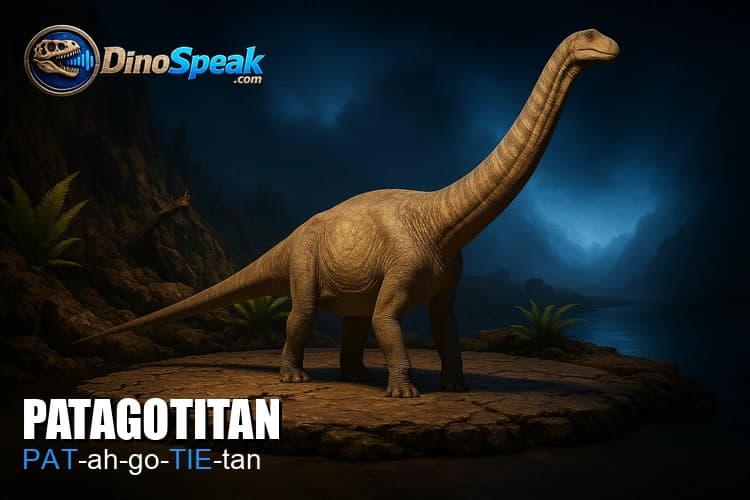
How to Pronounce Patagotitan
PAT-ah-go-TIE-tan
ALL CAPS = stressed syllable
What does Patagotitan mean?
Patagonia's giant titan of the earth
Name Roots
"Patago"
from Patagonia, the region in southern Argentina where the fossils were found (a Spanish/indigenous place name)
"titan"
a giant or supreme being, from Greek mythology where the Titans were colossal, all-powerful gods
Fun Facts
- ✓When scientists first measured Patagotitan in early press releases they estimated it at 37 meters (121 ft) and 69 tonnes, but later careful analysis revised those numbers down to 31 meters and around 50-60 tonnes, showing that even expert first impressions can be wrong when a skeleton is this enormous.
- ✓At least six individual Patagotitan skeletons were found together at the same site in Patagonia, suggesting these giants may have lived or traveled in groups, or that multiple animals died near the same water source during a drought around 100 million years ago.
- ✓The American Museum of Natural History in New York has a cast of the Patagotitan skeleton so large that the dinosaur's head sticks out through the doorway of the exhibit hall into the hallway beyond, because the creature simply does not fit inside the room.
- ✓Patagotitan had hollow air pockets inside its enormous vertebrae, a feature called pneumatization, which saved hundreds of pounds of bone weight and may have also connected to a system of air sacs that helped the animal breathe more efficiently than any reptile alive today.
- ✓A farm worker named Aureliano Hernandez discovered the first Patagotitan bones in 2012 while working on a ranch near La Flecha in Patagonia, and the species name mayorum was given in honor of the Mayo family who owned that ranch and allowed scientists to excavate the site.

Period
Early Cretaceous
100–101 MYA

Diet
Herbivore
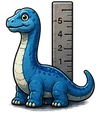
Size
102 ft (31 m)
110,000–132,000 lbs (50,000–60,000 kg)
Type
Sauropoda