Odobenocetops Pronunciation
Picture, name meaning, and how to say Odobenocetops. Free guide for kids and parents.
How to Pronounce Odobenocetops
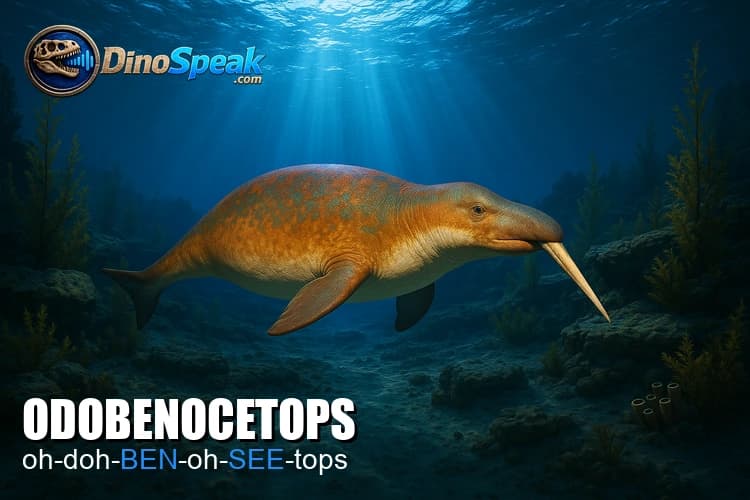
oh-doh-BEN-oh-SEE-tops
ALL CAPS = stressed syllable
What does Odobenocetops mean?
walrus-faced whale with tusks
Name Roots
"odobeno"
from Odobenus, the walrus genus, Latin/Greek origin referring to walrus-like features
"ceto"
whale, from Greek 'ketos' meaning sea monster or whale
"ops"
face or appearance, from Greek 'ops'
Fun Facts
- ✓Odobenocetops had two species with very different tusks: O. peruvianus had two tusks of roughly equal length, while O. leptodon had one tusk that could grow up to 1.35 meters long and another tiny stub, making it look almost like a narwhal.
- ✓Although Odobenocetops was a whale, it is more closely related to narwhals and belugas than to walruses, meaning its walrus-like appearance evolved completely independently through a process called convergent evolution.
- ✓Scientists believe Odobenocetops used suction feeding to slurp up clams and soft-bodied creatures from the seafloor, just like modern walruses do today, despite being a completely different type of animal.
- ✓Odobenocetops had forward-facing eyes that gave it binocular vision, which is extremely rare in whales and suggests it needed to judge distances carefully, possibly when hunting or navigating along the seafloor.
- ✓The flexible neck of Odobenocetops was remarkable because most whales have fused neck vertebrae and can barely turn their heads, but this creature could likely move its head side to side to root around on the ocean bottom.