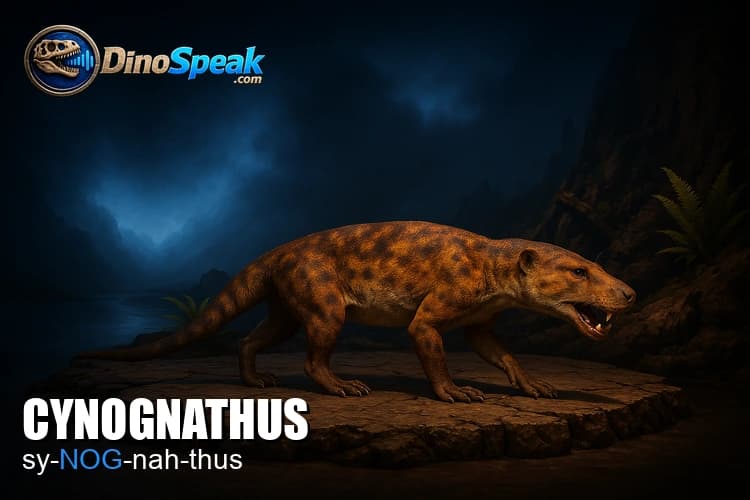
Cynognathus Pronunciation
Picture, name meaning, and how to say Cynognathus. Free guide for kids and parents.
How to Pronounce Cynognathus
sy-NOG-nah-thus
ALL CAPS = stressed syllable
What does Cynognathus mean?
Dog jaw, from Greek roots
Name Roots
"kyon / kyno"
dog, from ancient Greek
"gnathos"
jaw, from ancient Greek
Fun Facts
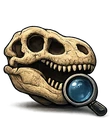
- ✓Cynognathus had three different types of teeth, incisors for gripping, large stabbing canines, and ridged cheek teeth for slicing meat, exactly like a modern carnivorous mammal and almost unique among reptile-like creatures of its era.
- ✓Scientists found matching Cynognathus fossils in South Africa and Argentina, rocks that are now separated by the entire Atlantic Ocean, and this was used as powerful evidence that the continents were once joined together in the supercontinent Gondwana.
- ✓The snout of Cynognathus has small pits called neurovascular foramina, the same structures that anchor whiskers in modern dogs and cats, strongly suggesting this ancient creature had sensitive facial whiskers more than 240 million years ago.
- ✓Cynognathus had a secondary bony palate, a shelf of bone separating its mouth from its nasal passage, which meant it could chew and breathe at the same time, a feature almost exclusively seen in mammals and a key step toward warm-blooded living.
- ✓Cynognathus lived in the aftermath of the greatest mass extinction in Earth history, the Permian-Triassic extinction event that wiped out up to 96 percent of all marine species, making its survival and spread across a supercontinent an extraordinary story of prehistoric resilience.