Mastodon Pronunciation
Picture, name meaning, and how to say Mastodon. Free guide for kids and parents.
How to Pronounce Mastodon
MAST-oh-don
ALL CAPS = stressed syllable
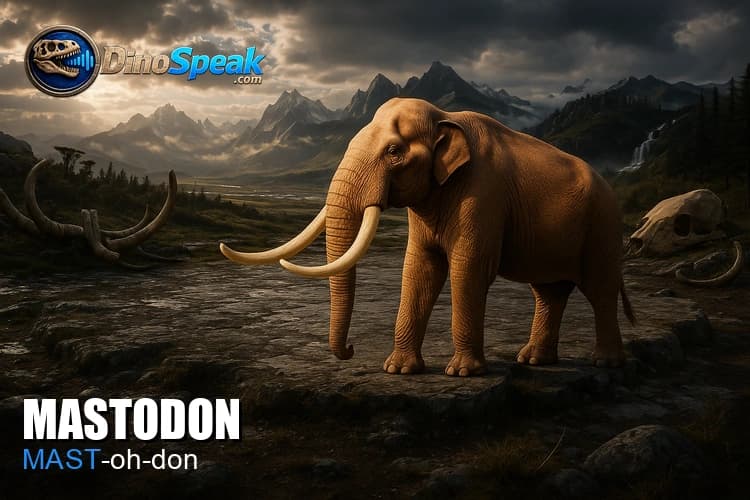
What does Mastodon mean?
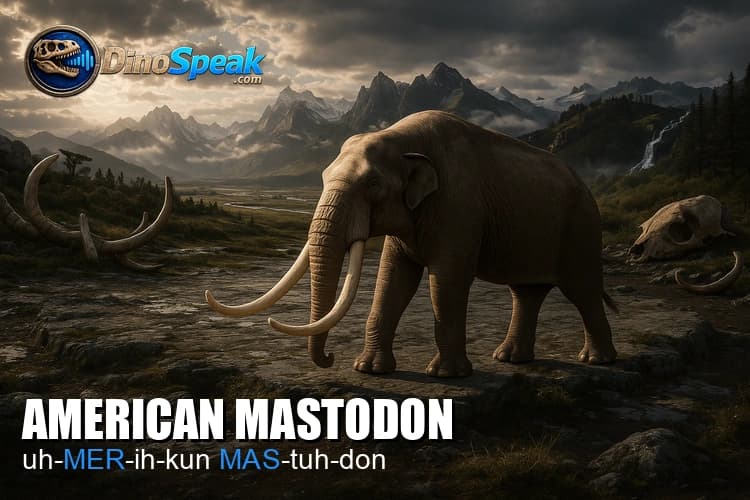
Nipple-toothed ancient elephant relative
Name Roots
"mastos"
nipple or breast (Greek) — referring to the cone-shaped bumps on their teeth
"odon"
tooth (Greek) — naming the animal by its most distinctive feature
Fun Facts
- ✓Mastodon teeth are so distinct that the animal was first scientifically identified not from a skeleton, but from a single molar tooth brought to Paris in the early 1800s — the nipple-shaped bumps on that tooth are literally what gave mastodons their name.
- ✓Unlike mammoths, which grazed on grass like modern elephants, mastodons were browsers that munched on tree branches, shrubs, and swamp plants — scientists know this because actual plant material has been found preserved inside mastodon stomach cavities at dig sites in Ohio.
- ✓The first mastodon fossils found in North America were discovered in 1705 near the Hudson River in New York, and colonists were so baffled by the enormous teeth that they sent them to London convinced they had found proof of biblical giants.
- ✓Mastodon tusks could grow over 16 feet (nearly 5 meters) long, and scientists can read them like tree rings: each year of the mastodon's life left a distinct growth layer, revealing the animal's age, diet stress, and even when females gave birth.
- ✓DNA extracted from mastodon fossils as recently as 2021 has shown that mastodons were NOT closely related to mammoths at all, having split from the elephant family tree at least 28 million years ago, making them more like a very distant woolly cousin than a direct ancestor.
Period
Late Miocene to Early Holocene
23–0.01 MYA
Diet
Herbivore
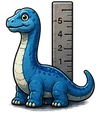
Size
9–10 ft tall at shoulder (2.7–3 m)
up to 13,000 lbs (5,900 kg)
Type
Proboscidea