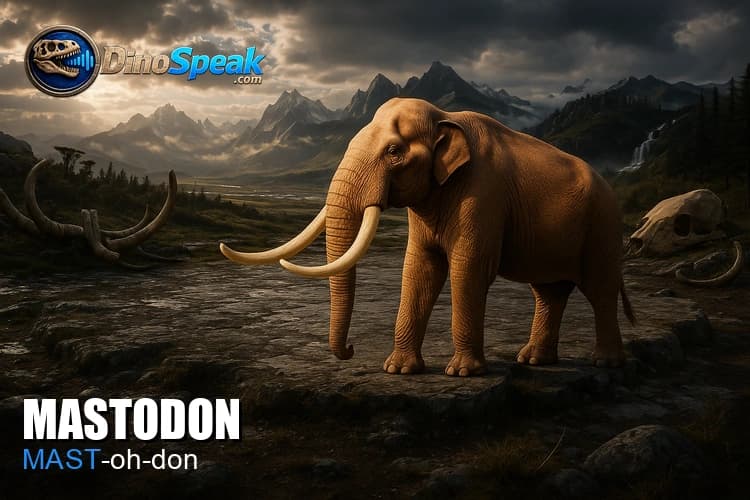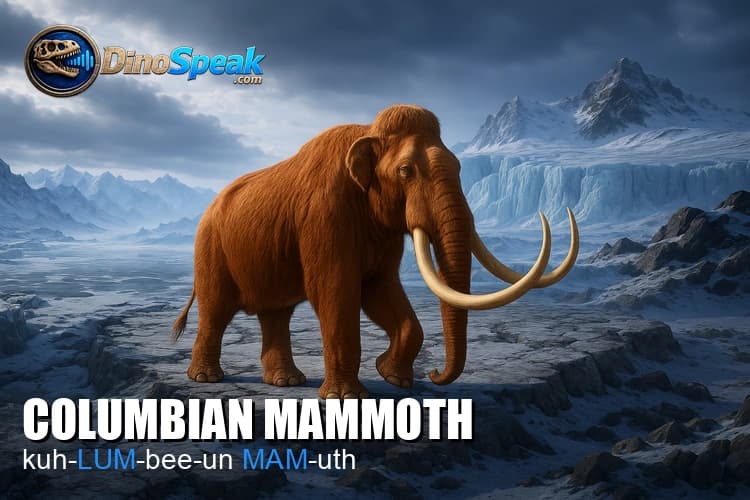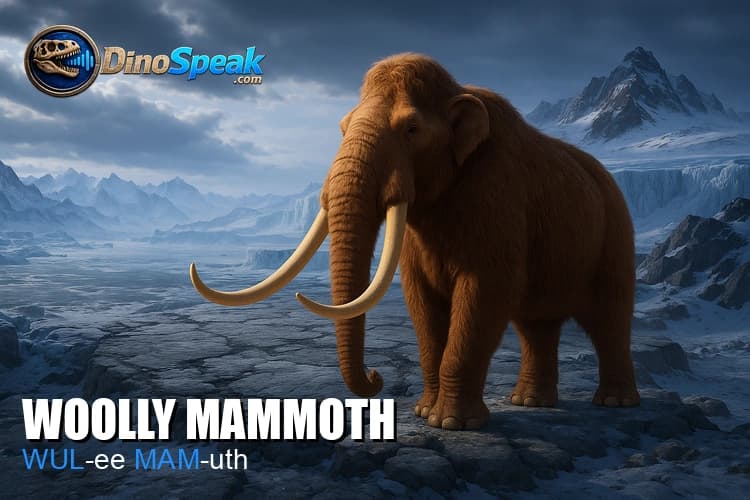
American Mastodon Pronunciation
Picture, name meaning, and how to say American Mastodon. Free guide for kids and parents.
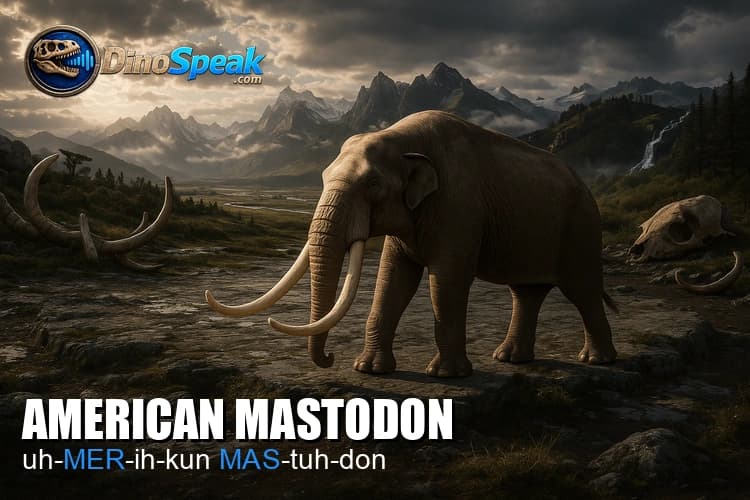
How to Pronounce American Mastodon
uh-MER-ih-kun MAS-tuh-don
ALL CAPS = stressed syllable
What does American Mastodon mean?
Nipple-toothed beast of America
Name Roots
"mastos"
breast or nipple, from Ancient Greek, referring to the cone-shaped cusps on their teeth
"odont"
tooth, from Ancient Greek, because their teeth had rounded bumps unlike flat elephant teeth
"Mammut"
the genus name, possibly derived from a Siberian word for a large earth-burrowing beast
Fun Facts
- ✓A mastodon skeleton found in the Aucilla River in Florida had a sharpened ivory spear tip lodged inside it, proving humans and mastodons lived alongside each other at least 14,550 years ago, making it one of the oldest confirmed human-megafauna interactions in the Americas.
- ✓Mastodons and woolly mammoths are NOT the same thing and are not even close relatives: mastodons split from the elephant family tree at least 28 million years ago during the Oligocene, while mammoths are far more closely related to modern African elephants.
- ✓Big Bone Lick in Kentucky, where many famous mastodon bones were first collected in the 1700s, was visited by Thomas Jefferson who was so obsessed with mastodons that he kept bones in the White House and instructed Lewis and Clark to look for living ones in the unexplored west.
- ✓Mastodon teeth were so different from mammoth or elephant teeth that scientists once thought they belonged to giant carnivores, until researchers realized the bumpy cone-shaped cusps were perfect for crushing leaves and branches rather than tearing meat.
- ✓Preserved mastodon dung found in ancient lake sediments in Indiana revealed that these animals ate mostly spruce, pine, and swamp plants rather than grass, showing they preferred the edge forests and wetlands of North America rather than open grasslands.
Period
Late Miocene to Early Holocene
5.3 MYA to 10,000 years ago
Diet
Herbivore
Size
Up to 16 ft (4.9 m)
Up to 13,000 lbs (5,900 kg)
Type
Proboscidea