Lystrosaurus Pronunciation
Picture, name meaning, and how to say Lystrosaurus. Free guide for kids and parents.
How to Pronounce Lystrosaurus
LIS-troh-SORE-us
ALL CAPS = stressed syllable
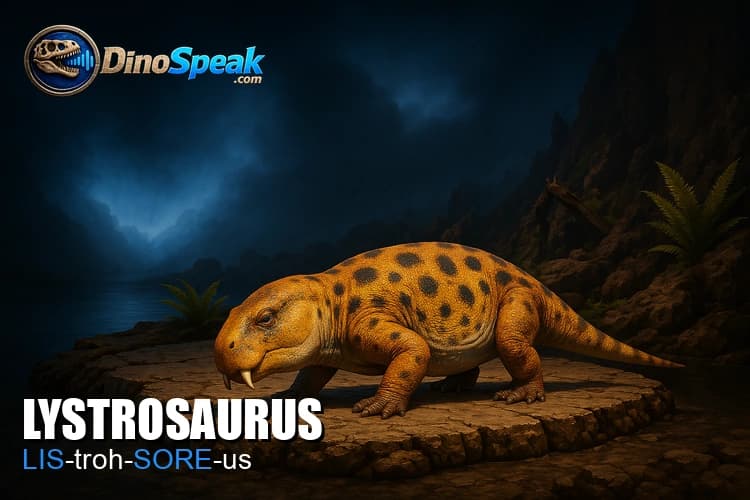
What does Lystrosaurus mean?
Shovel lizard with tusk-like teeth
Name Roots
"lystron"
shovel or scoop, from Ancient Greek
"sauros"
lizard, from Ancient Greek
Fun Facts
- ✓After the end-Permian mass extinction about 252 million years ago, Lystrosaurus made up an estimated 90 to 95 percent of all land vertebrates on Earth, making it arguably the most numerically dominant large land animal in the history of life.
- ✓Fossils of Lystrosaurus found in Antarctica were critical early evidence that Antarctica was once connected to Africa and India as part of the supercontinent Pangaea, helping confirm the theory of continental drift decades before GPS made it obvious.
- ✓Lystrosaurus had no real teeth for chewing. Instead it used a sharp keratinous beak, like a turtle crossed with a pig, to slice through tough plants, and its only true teeth were two protruding tusks used for digging up roots.
- ✓Scientists studying bone growth rings in Lystrosaurus fossils, similar to tree rings, have found evidence that some populations may have entered a dormant state similar to hibernation or estivation to survive extreme seasonal conditions after the extinction event.
- ✓Lystrosaurus survived for roughly 13 million years straddling the most catastrophic boundary in Earth's history, appearing in the fossil record in the late Permian and thriving well into the Early Triassic, making it one of the longest-lasting disaster survivors ever.

Period
Late Permian to Early Triassic
259.5–246.7 MYA

Diet
Herbivore

Size
3–5 ft (0.9–1.5 m)
roughly 20–220 lbs (9–100 kg) depending on species

Type
Therapsida