Josephoartigasia Pronunciation
Picture, name meaning, and how to say Josephoartigasia. Free guide for kids and parents.
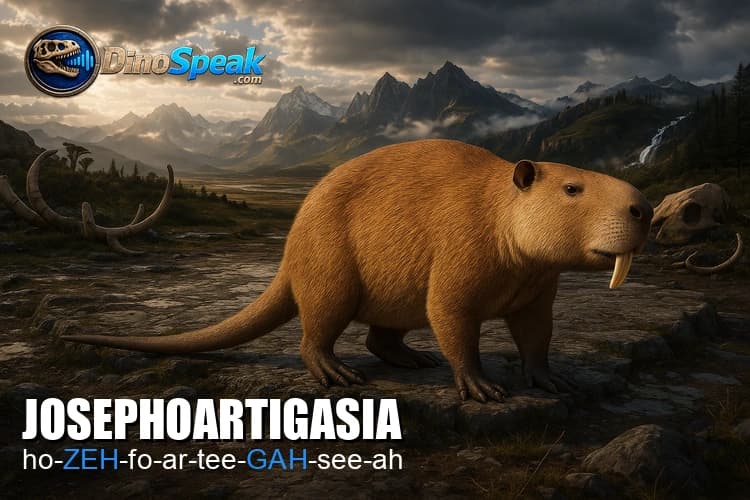
How to Pronounce Josephoartigasia
ho-ZEH-fo-ar-tee-GAH-see-ah
ALL CAPS = stressed syllable
What does Josephoartigasia mean?
Named after Uruguayan hero José Artigas
Name Roots
"Josepho"
Latinized form of José, honoring Uruguayan national hero José Artigas; Spanish/Latin origin
"artigasia"
Named after Artigas, the founding father of Uruguay; Spanish/Latin origin
Fun Facts
- ✓Josephoartigasia monesi had incisors capable of generating a bite force of up to 1,389 Newtons for normal chewing, but researchers calculated the teeth could withstand forces up to 4,165 Newtons, suggesting it used its teeth like tools for digging or fighting.
- ✓The nearly complete skull of J. monesi described in 2008 measures an estimated 53 centimeters long, making it one of the largest rodent skulls ever found in the fossil record.
- ✓Josephoartigasia is a member of the family Dinomyidae, and its closest living relative today is the pacarana, a shy, slow-moving South American rodent that weighs only about 15 kilograms.
- ✓Both known species of Josephoartigasia were found at the same location: the Barrancas de San Gregorio cliffs along Kiyú beach in Uruguay, making this a globally important fossil site for giant rodent research.
- ✓The genus is named after José Artigas, the revolutionary hero who led Uruguay's independence movement in the early 1800s, so a prehistoric giant rodent is literally named after a national founding father.

Period
Pliocene to Early Pleistocene
3.6-1.0 MYA

Diet
Herbivore

Size
10 ft (3 m)
up to 2,200 lbs (1,000 kg)
Type
Rodentia