Elasmotherium Pronunciation
Picture, name meaning, and how to say Elasmotherium. Free guide for kids and parents.
How to Pronounce Elasmotherium
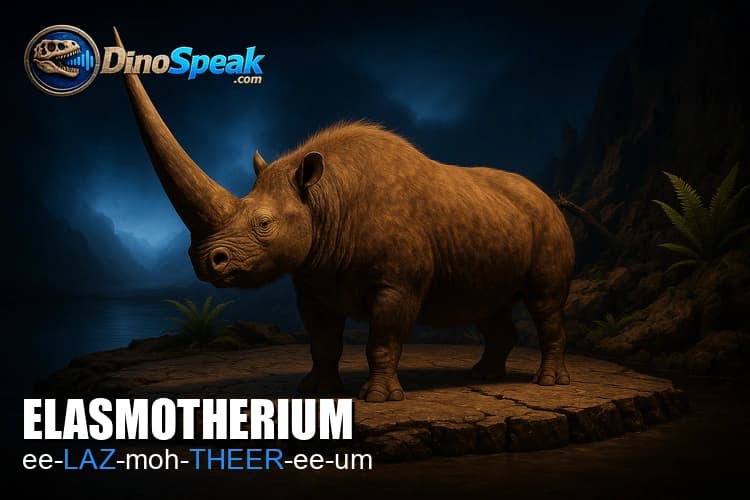
ee-LAZ-moh-THEER-ee-um
ALL CAPS = stressed syllable
What does Elasmotherium mean?
Plated beast with a massive horn
Name Roots
"elasmo"
from Greek 'elasmos', meaning plate or beaten metal
"therium"
from Greek 'therion', meaning wild beast or animal
Fun Facts
- ✓Radiocarbon dating of a skull found in Kazakhstan confirmed that Elasmotherium was still alive as recently as 39,000 years ago, meaning it shared the planet with modern Homo sapiens for thousands of years.
- ✓Scientists analyzing its high-crowned teeth, called hypsodont teeth, concluded it was a specialized grass eater that likely grazed on tough steppe grasses rather than browsing on leaves like many other large herbivores.
- ✓Ancient cave paintings found in France and Spain may actually depict Elasmotherium rather than stylized modern rhinos, because some drawings show a single-horned animal with a distinctive domed forehead matching Elasmotherium's skull shape.
- ✓Elasmotherium's horn was not made of bone like a deer antler but was composed of keratin, the same protein in your fingernails, which is why no actual horn has ever been found fossilized since keratin decays quickly.
- ✓Some historians believe that medieval legends about the unicorn were partly inspired by ancient folk memories of or encounters with Elasmotherium, since early accounts of unicorns from Central Asia describe a massive, horse-like beast rather than a delicate white horse.

Period
Late Pliocene to Late Pleistocene
2.58–0.039 MYA
Diet
Herbivore
Size
15 ft (4.5 m)
8,800–10,000 lbs (4,000–4,500 kg)
Type
Rhinocerotoidea