Coelodonta Pronunciation
Picture, name meaning, and how to say Coelodonta. Free guide for kids and parents.
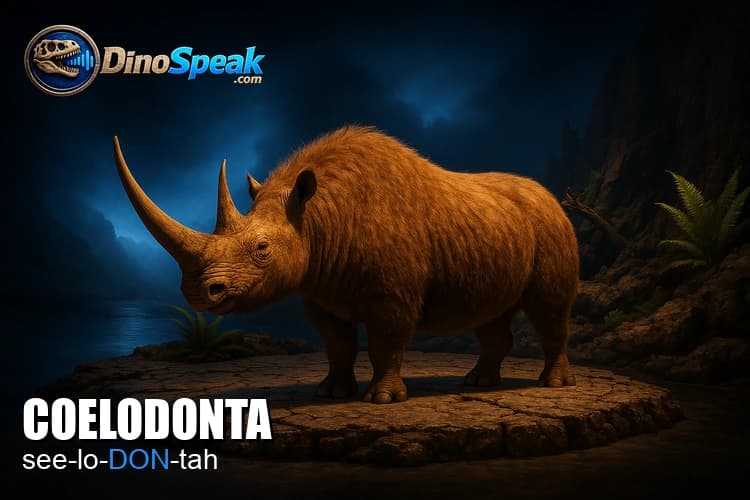
How to Pronounce Coelodonta
see-lo-DON-tah
ALL CAPS = stressed syllable
What does Coelodonta mean?
hollow-toothed ancient rhinoceros of Eurasia
Name Roots
"koilos"
hollow, from Ancient Greek
"odont"
tooth, from Ancient Greek odontos
"-a"
noun-forming suffix used in scientific Latin naming
Fun Facts
- ✓A female woolly rhinoceros calf nicknamed Sasha was discovered in Siberia in 2014 with her horn still attached, making her one of the most complete ice age animal specimens ever found at an estimated 20,000 years old.
- ✓Scientists analyzing the stomach contents of frozen Coelodonta specimens found they ate mostly grasses, sedges, and low-growing Arctic herbs, giving us an exact menu from the last ice age.
- ✓The front horn of a woolly rhinoceros could grow up to 3.3 feet (1 meter) long and was flattened side to side rather than round, acting like a snow plow to scrape through ice and reach frozen vegetation underneath.
- ✓Cave paintings in Chauvet Cave in France, dated to roughly 32,000 years ago, show woolly rhinoceroses in vivid detail, proving that early humans not only saw these animals but studied them closely enough to capture their distinctive shoulder hump and sweeping horn.
- ✓DNA extracted from permafrost specimens shows that the woolly rhinoceros is most closely related to the modern Sumatran rhinoceros, not the white or black rhino, meaning a living cousin of Coelodonta still exists in Southeast Asian jungles today.

Period
Pliocene to Late Pleistocene
3.7–0.014 MYA
Diet
Herbivore
Size
12–13 ft (3.7–4 m)
4,400–6,600 lbs (2,000–3,000 kg)
Type
Rhinocerotoidea