Dryptosaurus Pronunciation
Picture, name meaning, and how to say Dryptosaurus. Free guide for kids and parents.
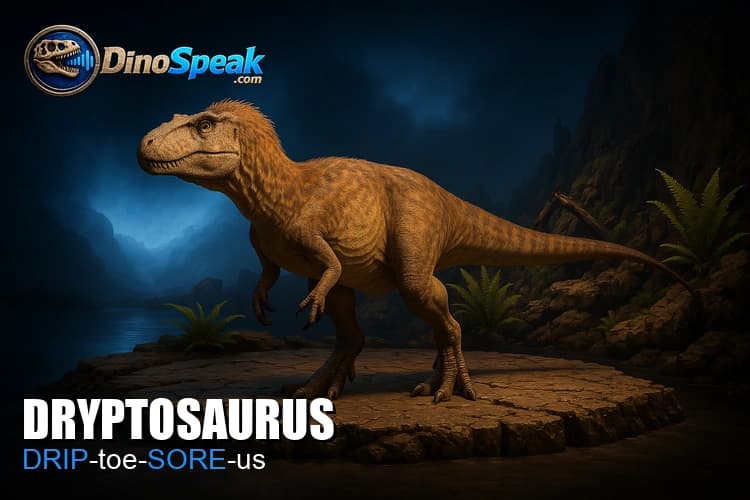
How to Pronounce Dryptosaurus
DRIP-toe-SORE-us
ALL CAPS = stressed syllable
What does Dryptosaurus mean?
Tearing lizard with eagle claws
Name Roots
"dryptos"
tearing or rending, from Ancient Greek
"sauros"
lizard, from Ancient Greek
"aquila"
eagle, from Latin, referencing the claws
"unguis"
claw or nail, from Latin
Fun Facts
- ✓Dryptosaurus was originally named Laelaps aquilunguis by Edward Drinker Cope in 1866, but that genus name was already taken by a species of mite, so his bitter rival Othniel Charles Marsh got to rename the whole animal in 1877.
- ✓The species name aquilunguis literally means eagle claws in Latin, and the hand claws on Dryptosaurus were so large and curved they genuinely resembled the talons of a raptor bird, making it one of the most vividly named dinosaurs in science.
- ✓A famous 1897 painting by Charles R. Knight, commissioned for the American Museum of Natural History, depicted two Dryptosaurus leaping dramatically at each other, making it one of the first ever action scenes painted of dinosaurs and influencing how people imagined prehistoric life for over a century.
- ✓Unlike its later relatives Tyrannosaurus rex and Albertosaurus, Dryptosaurus had notably longer and more powerful forelimbs, suggesting it may have used its arms actively in catching prey rather than having the tiny near-useless arms that T. rex is famous for.
- ✓Dryptosaurus lived on an ancient landmass called Appalachia, a long island continent that had split off from western North America due to a vast inland sea called the Western Interior Seaway, meaning East Coast dinosaurs like Dryptosaurus evolved in near-isolation from the famous giants of the American West.
Period
Late Cretaceous
67–66 MYA
Diet
Carnivore
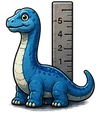
Size
20–25 ft (6–7.6 m)
1,500–3,000 lbs (680–1,360 kg)
Type
Theropoda