Anomalocaris Pronunciation
Picture, name meaning, and how to say Anomalocaris. Free guide for kids and parents.
How to Pronounce Anomalocaris
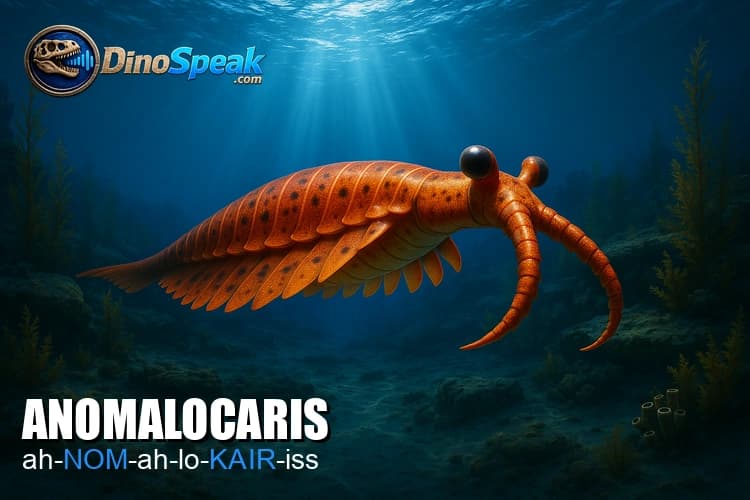
ah-NOM-ah-lo-KAIR-iss
ALL CAPS = stressed syllable
What does Anomalocaris mean?
Abnormal or unlike other shrimp
Name Roots
"anomalo"
abnormal or irregular, from Greek 'anomalos'
"caris"
shrimp or crab, from Greek 'karis'
Fun Facts
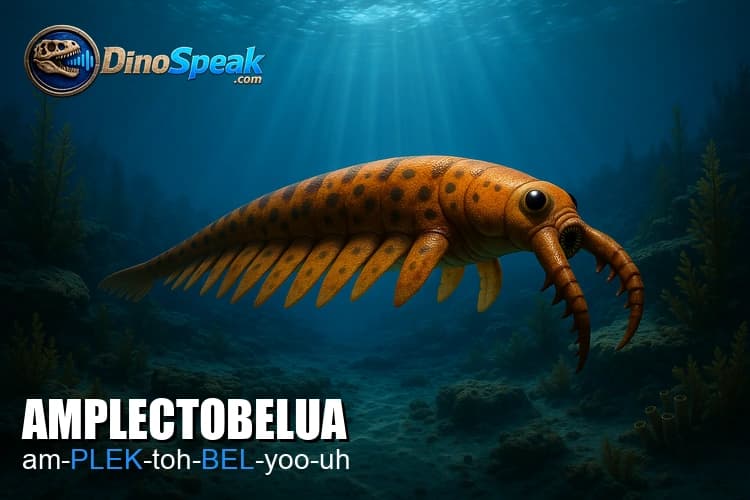
- ✓Anomalocaris had compound eyes containing up to 16,000 individual lenses, making its vision sharper than a modern mantis shrimp and better than almost any animal on the planet at the time.
- ✓When the first fossil pieces were found in the 1880s, scientists thought the frontal claws were a shrimp, the circular mouth was a jellyfish, and the body was a different animal entirely. It took nearly 100 years to realize they were all one creature.
- ✓Anomalocaris was the apex predator of the Cambrian seas, meaning it sat at the top of the food chain at a time when all complex life on Earth lived in the ocean. There was nothing bigger or scarier.
- ✓A perfectly preserved Anomalocaris fossil from the Emu Bay Shale in South Australia, described in a 2011 paper in Nature by researchers including Dr. John Paterson, showed the eye structure in stunning detail and rewrote what we knew about early animal vision.
- ✓At up to 3.3 feet long, Anomalocaris was the largest animal on Earth during the Cambrian period, a time when most other creatures were smaller than your fingernail.