Cave Hyena Pronunciation
Picture, name meaning, and how to say Cave Hyena. Free guide for kids and parents.
How to Pronounce Cave Hyena
KAYV HY-ee-nuh
ALL CAPS = stressed syllable
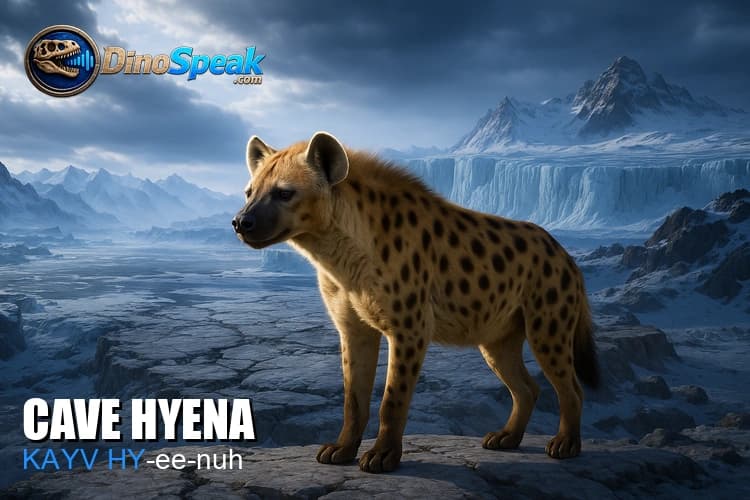
What does Cave Hyena mean?
Spotted hyena that lived in caves
Name Roots
"hyaina"
from Greek, meaning 'hog-like creature' or 'the hog-bristled one', referring to the mane running down its back
"cave"
from Old English 'cava', meaning a hollow or chamber in rock, describing where their bones and dens are most commonly found
Fun Facts
- ✓Cave hyenas left behind white chalk-like droppings called coprolites in caves across Europe, and when scientists crack them open today they find crushed mammoth and woolly rhino bone fragments inside, a 40,000-year-old snapshot of dinner.
- ✓Kirkdale Cave in Yorkshire, England, was discovered in 1821 and contained over 300 individual hyena bones along with the remains of at least 23 other species including hippos and elephants, proving these predators once roamed Britain.
- ✓Cave hyenas are classified as either a distinct species or a subspecies of the modern spotted hyena, and the debate is still ongoing among scientists, making the cave hyena one of prehistory's most hotly argued identity cases.
- ✓Ancient cave paintings in France, including those at Font-de-Gaume and Chauvet Cave, depict hyenas drawn by Ice Age humans, making the cave hyena one of the few prehistoric animals we have both fossil evidence AND ancient human artwork for.
- ✓Cave hyenas and Neanderthals competed directly for the same caves and the same prey, and fossil sites in France and Germany show hyena tooth marks on Neanderthal bones and Neanderthal tool marks on hyena bones, evidence of a brutal rivalry lasting thousands of years.