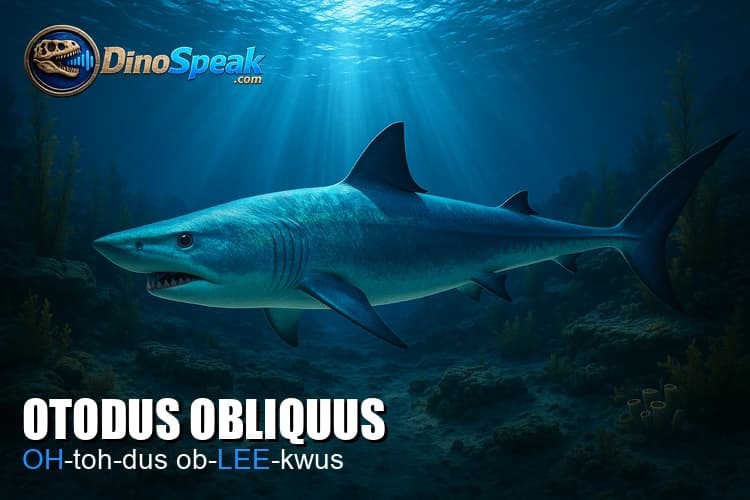
Otodus obliquus Pronunciation
Picture, name meaning, and how to say Otodus obliquus. Free guide for kids and parents.
How to Pronounce Otodus obliquus
OH-toh-dus ob-LEE-kwus
ALL CAPS = stressed syllable
What does Otodus obliquus mean?
Ear-shaped tooth, slanted or oblique
Name Roots
"otos (ous)"
ear, from Ancient Greek — referring to the ear-like shape of the shark's teeth
"odous (odontos)"
tooth, from Ancient Greek — the defining feature preserved as fossils
"obliquus"
slanted or diagonal, from Latin — describing the angled shape of the tooth cusps
Fun Facts
- ✓Otodus obliquus could reach 8 to 9 metres (26 to 30 feet) in length, making it one of the largest predatory fish alive during the early Paleocene, just after the mass extinction that wiped out non-avian dinosaurs 66 million years ago.
- ✓Fossil teeth of Otodus obliquus have been found on nearly every major continent, including the United States, France, Kazakhstan, New Zealand, and South America, proving it was a truly global ocean predator.
- ✓Scientists believe Otodus obliquus sits at the base of the Otodus lineage, the same evolutionary branch that eventually produced Megalodon, meaning this shark is essentially the great-great-grandparent of the largest shark in Earth's history.
- ✓The teeth of Otodus obliquus are triangular with distinctive side cusps called cusplets, and these unique ear-shaped teeth are so recognizable that fossil hunters have been collecting them for centuries, long before scientists formally described the species.
- ✓Otodus obliquus lived during a period called the Paleocene-Eocene Thermal Maximum, when global ocean temperatures were dramatically warmer than today, allowing giant warm-water predators to thrive from the tropics all the way toward polar seas.