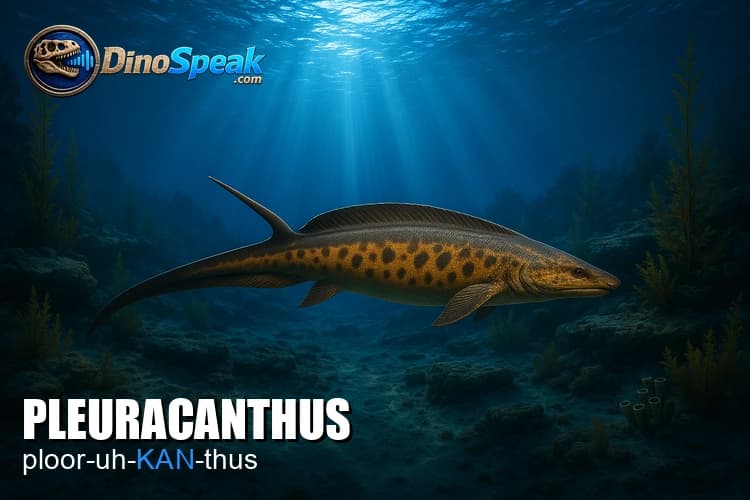
Pleuracanthus Pronunciation
Picture, name meaning, and how to say Pleuracanthus. Free guide for kids and parents.
How to Pronounce Pleuracanthus
ploor-uh-KAN-thus
ALL CAPS = stressed syllable
What does Pleuracanthus mean?
side spine or ribbed thorn
Name Roots
"pleura"
side or rib, from Ancient Greek
"akanthos"
thorn or spine, from Ancient Greek
Fun Facts
- ✓Pleuracanthus survived for roughly 76 million years, appearing around 315 million years ago and persisting until approximately 239 million years ago, spanning the late Carboniferous all the way into the Triassic period.
- ✓Unlike modern sharks that roam open oceans, Pleuracanthus was primarily a freshwater predator, hunting in rivers, swamps, and shallow lakes across ancient continents that looked nothing like they do today.
- ✓The distinctive cephalic spine on the back of its skull was not just for show: scientists believe it was a defensive weapon, possibly even venomous, similar to spines found on some modern catfish.
- ✓Fossil evidence of Pleuracanthus has been found on five widely separated landmasses including the United States, Australia, Norway, the United Kingdom, and Germany, proving how widespread this fish was before the continents fully separated.
- ✓Pleuracanthus belonged to the order Xenacanthiformes, a group of ancient sharks so different from living sharks that when scientists first found their teeth they mistakenly thought they belonged to an entirely different class of animal.

Period
Carboniferous to Permian
300-251 MYA

Diet
Carnivore

Size
6.5 ft (2 m)
66 lbs (30 kg)

Type
Chondrichthyes