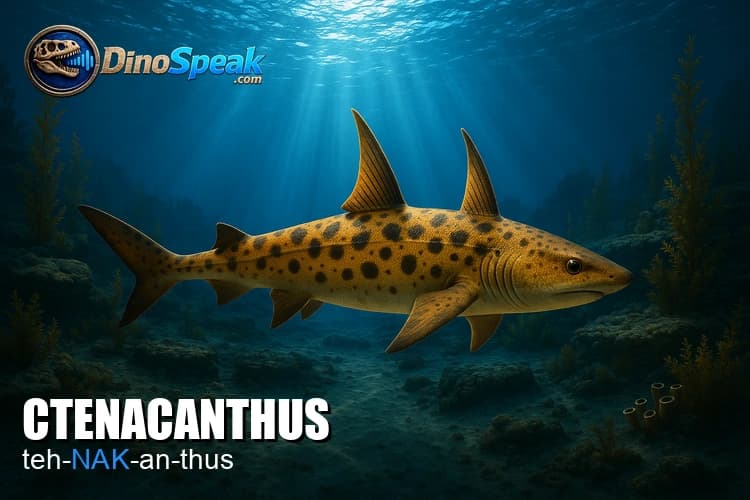
Ctenacanthus Pronunciation
Picture, name meaning, and how to say Ctenacanthus. Free guide for kids and parents.
How to Pronounce Ctenacanthus
teh-NAK-an-thus
ALL CAPS = stressed syllable
What does Ctenacanthus mean?
comb spine ancient shark relative
Name Roots
"kteis / ktenos"
comb, from Ancient Greek
"akantha"
spine or thorn, from Ancient Greek
Fun Facts
- ✓Ctenacanthus first appeared roughly 388 million years ago during the Late Devonian period, meaning it was already ancient by the time the first dinosaurs walked the Earth around 230 million years ago.
- ✓The genus survived all the way to approximately 252 million years ago, giving it a staggering run of about 136 million years across multiple geological periods including the Devonian, Carboniferous, Permian, and possibly into the Triassic boundary.
- ✓Fossil remains of Ctenacanthus have been found on at least seven countries worth of territory, including the United States, Brazil, India, Greenland, Germany, the United Kingdom, and Russia, showing this fish was a true global traveler in ancient seas.
- ✓Ctenacanthus belongs to the order Ctenacanthiformes, a group of cartilaginous fish related to modern sharks and rays, yet distinct enough to form their own separate evolutionary branch that no longer exists today.
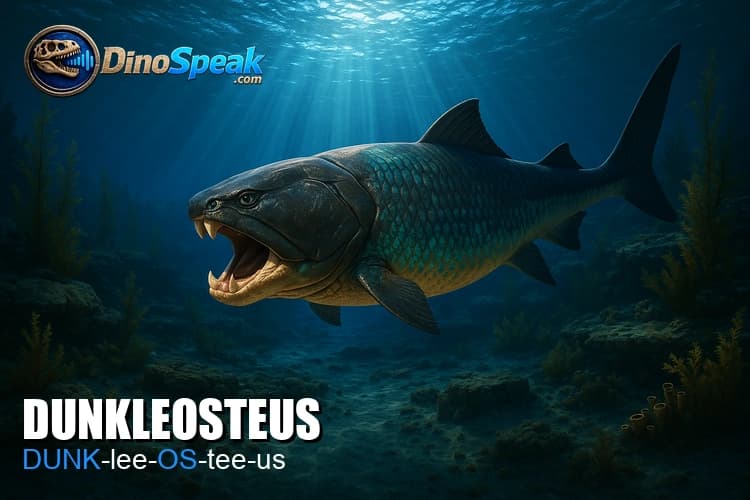
- ✓The Cleveland Shale of Ohio, one of the sites where Ctenacanthus fossils have been found, is one of the most famous Late Devonian fossil fish beds in the world, and has also produced the colossal armored fish Dunkleosteus, meaning Ctenacanthus once shared its waters with some of the most ferocious jawed creatures that ever lived.