Pachyornis Pronunciation
Picture, name meaning, and how to say Pachyornis. Free guide for kids and parents.
How to Pronounce Pachyornis
pak-ee-OR-niss
ALL CAPS = stressed syllable
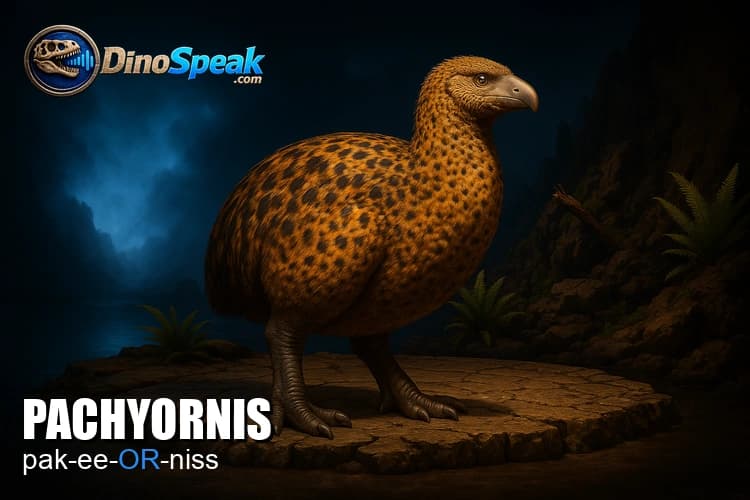
What does Pachyornis mean?
thick or heavy bird from New Zealand
Name Roots
"pachy-"
thick or heavy, from Greek 'pachys'
"ornis"
bird, from Greek 'ornis'
Fun Facts
- ✓Pachyornis elephantopus, the 'heavy-footed moa,' had the most robust leg bones of any moa species, with a femur so wide and stocky it looks more like a dinosaur limb than a bird bone.
- ✓DNA studies published in 2009 revealed that Pachyornis belongs to a clade whose ancestors arrived in New Zealand over 50 million years ago, shortly after the landmass separated from the ancient supercontinent Gondwana.
- ✓Pachyornis australis is known as the 'crested moa' because pollen and plant material found preserved inside fossil gut contents revealed it browsed the subalpine shrublands of the South Island, eating tussock grasses and alpine herbs.
- ✓Genetic research has identified two distinct lineages of Pachyornis, one from the North Island and one from the South Island, which are different enough that scientists believe they could eventually be reclassified as two separate species.
- ✓Pachyornis, like all moa, had no wings whatsoever, not even the tiny vestigial wing bones seen in kiwi. They are among the most completely wingless birds ever to have lived on Earth.