Llanocetus Pronunciation
Picture, name meaning, and how to say Llanocetus. Free guide for kids and parents.
How to Pronounce Llanocetus
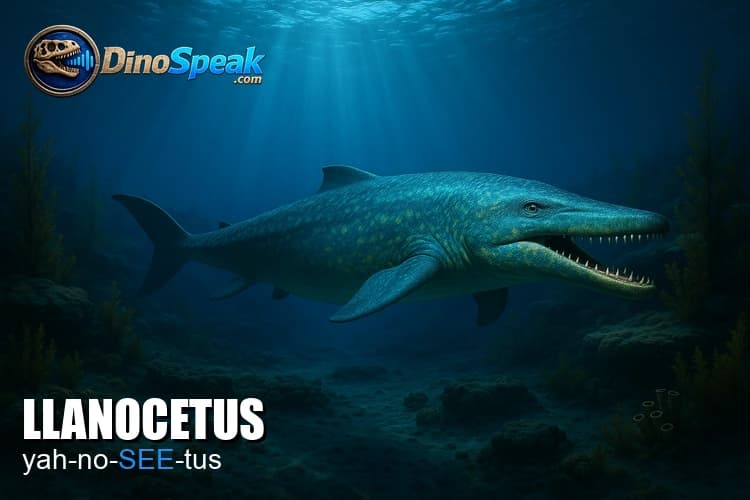
yah-no-SEE-tus
ALL CAPS = stressed syllable
What does Llanocetus mean?
Llano plain whale from ancient seas
Name Roots
"Llano"
referring to the Llano de Fosiles, a fossil-rich plain in Antarctica where the creature was found; Spanish for plain or flatland
"cetus"
whale; from Latin cetus and Greek ketos, meaning large sea creature or whale
Fun Facts
- ✓The juvenile Llanocetus fossil from Antarctica measures an estimated 8 meters (26 feet) long, but a second unnamed species is estimated to have reached up to 12 meters (39 feet), making it one of the largest animals of the late Eocene epoch.
- ✓Llanocetus lived approximately 36.7 to 33.9 million years ago during the Late Eocene, placing it at a critical turning point in whale evolution when the lineage of baleen whales was just beginning to diverge from toothed ancestors.
- ✓Despite being classified as an early mysticete, the group that includes all modern baleen whales, Llanocetus had actual teeth in its jaws and no baleen whatsoever, overturning the old idea that the first mysticetes were small and toothy.
- ✓Fossils of Llanocetus have been found in two of the most remote places on Earth: Antarctica and New Zealand, suggesting this ancient whale ranged across the cold southern oceans of its time.
- ✓Scientists believe Llanocetus was probably a suction feeder, using powerful throat muscles to slurp prey into its mouth much like modern beaked whales and pygmy right whales still do today.