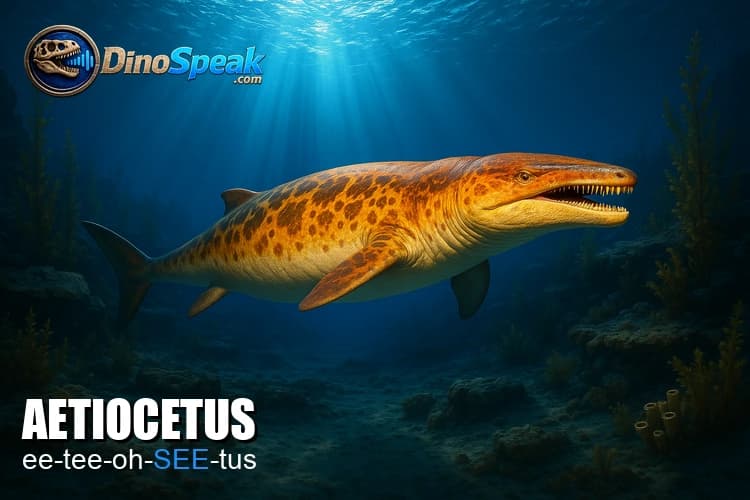
Aetiocetus Pronunciation
Picture, name meaning, and how to say Aetiocetus. Free guide for kids and parents.
How to Pronounce Aetiocetus
ee-tee-oh-SEE-tus
ALL CAPS = stressed syllable
What does Aetiocetus mean?
early or primitive whale from the sea
Name Roots
"aetio-"
primitive or early, from Greek 'aitios' meaning cause or origin
"-cetus"
whale, from Greek 'ketos' meaning sea monster or large fish
Fun Facts
- ✓Aetiocetus had tiny holes in its upper jaw called nutrient foramina, the same kind of holes seen in modern baleen whales that carry blood vessels to feed growing baleen plates, proving it had baleen even though it also kept its teeth.
- ✓Aetiocetus lived between 33.9 and 23 million years ago during the Oligocene epoch, a time when whales were still figuring out whether to keep their teeth or ditch them entirely for filter-feeding.
- ✓Fossils of Aetiocetus have been found on both sides of the Pacific Ocean, in Oregon in the United States, in Japan, and in Mexico, showing it roamed an enormous stretch of ancient ocean.
- ✓The genus was first scientifically described in 1966 by fossil hunter Douglas Emlong, who collected the original Oregon specimen himself and recognized it as something completely new to science.
- ✓There are four known species of Aetiocetus: A. cotylalveus, A. polydentatus, A. tomitai, and A. weltoni, each found in different parts of the North Pacific and showing slight variations in tooth and jaw structure.